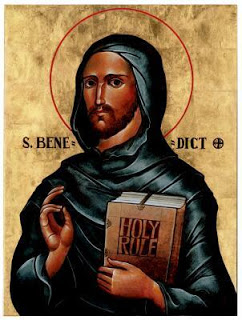
St. Benedict
Is sacredness different for Indians? Catholics? Jews?
Thorsgard, who works as the historic preservation officer for Confederated Tribes of the Grand Ronde, told the crowd about one sacred site that crosses cultural divides.
Take, for example, an abbey in the Willamette Valley settled by Benedictine monks in 1882 at Mt.Angel.
Local tribes long held the grounds as sacred, and Thorsgard marveled that—regardless of cultural background—denizen and settler alike found the mountain top a rich site for prayer.
Rather than arguing that the Catholic settler usurped native holdings, Thorsgard figures Indian ways-of-knowing permeate the Abbey.
I like to think Catholics pray in the same spot as my relatives, he says.
Cultural intersections move both ways: the colonial hegemony doubtless holds sway over the native, but indigenous epistemologies filter through, too.
But where does sacredness begin? Where does it end?
Thorsgard believes some buildings are sentient: a longhouse, for example. “Buildings are living entities,” he says.
But think about a sacred building that has meaning to you. Is it still sacred if you…take down one wall? Two walls? Three walls?
He asks a final question: how many walls can we take down until a building is no longer sacred?
[Day three of Native American Heritage Month. I pledge one blog per day in honor of my Osage and Oglala ancestors.]


 Cynthia (Ištá Tȟó Tȟó) Coleman Emery's Blog