On this date: Monday, 29 December 1890
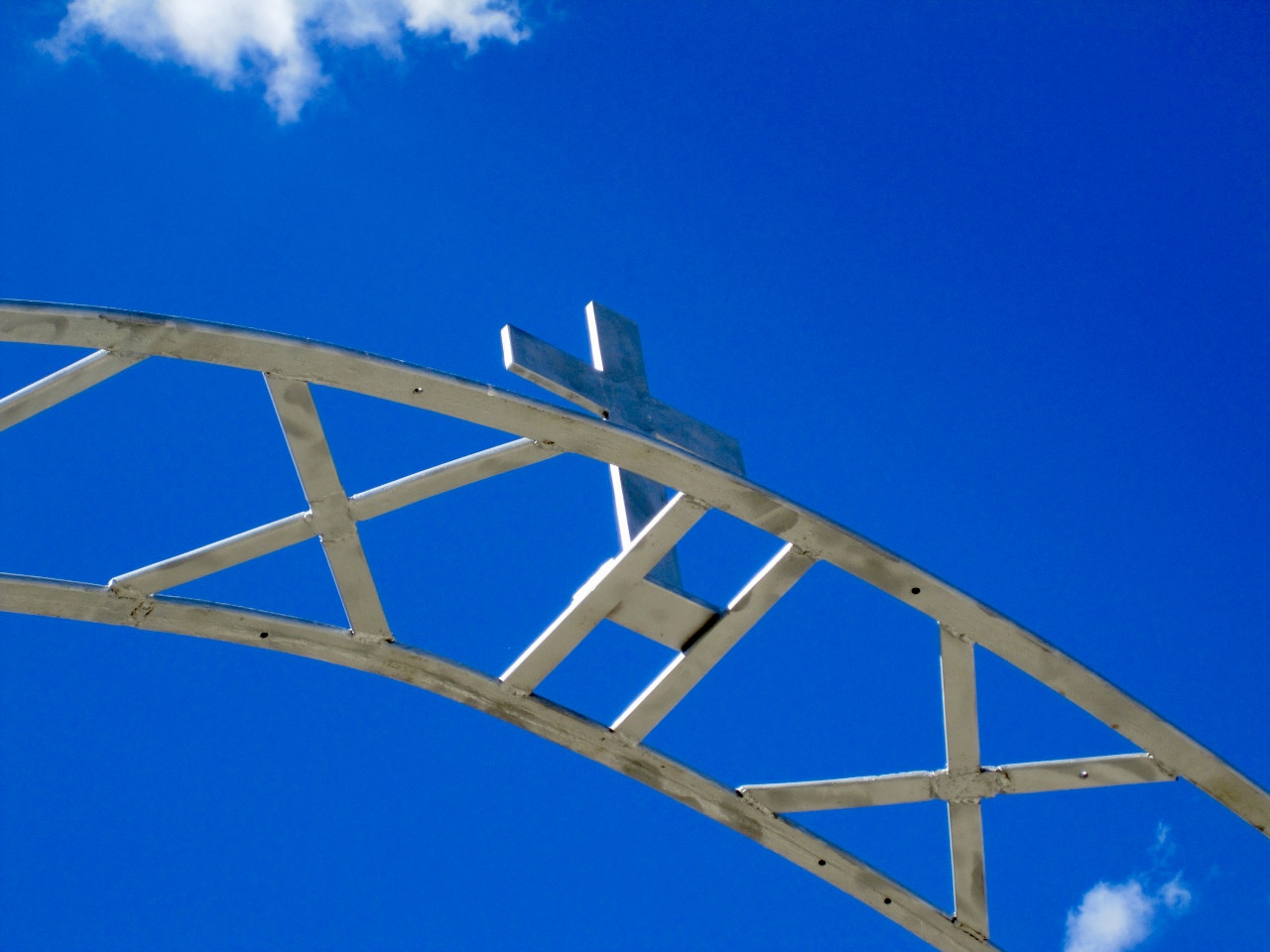
Wounded Knee, South Dakota, 2016. Photo by C. Coleman Emery
The end of December brings heartache when I recall the slaughter of children, women and men in South Dakota—not far from the Pine Ridge Reservation—where my mother’s great-grandmother and her parents lived in 1890.
Some say Pine Ridge residents could hear the gunshots miles away.
On the morning of 29 December—also Monday, like today—the US Cavalry shot and killed 250 or more Sioux relatives at Wounded Knee Creek.
I wrote about the slaughter in my 2020 book and, with your permission, will share a slightly edited version that recalls the 1890 massacre.
“During a frigid December, in 1890, a band of Miniconjou Sioux—120 men and 230 women and children—fled their village on the Cheyenne River and headed south for Pine Ridge, where they sought refuge from government agents and the U.S. Army.
“The Miniconjou, led by Spotted Elk (Unpan Gleska), also known as Big Foot, were fearful of soldiers ‘intent on arresting Indians who continued to practice the banned Ghost Dance religion, which the whites believed was whipping them up for war.’ The Indians had good reason for their dread: Sitting Bull (Tatanka Iyotake), a Hunkpapa headman, had been killed days earlier, and rumors spread that Spotted Elk would be targeted next.
“With the Army on their trail, and the Seventh Calvary spoiling for a fight after the trouncing of Custer a decade earlier, the Miniconjou fled through snow and ice to reach Pine Ridge. On Sunday, December 28, the band encountered the Seventh Calvary, where they spent an uneasy night, camped together, at Wounded Knee Creek. Historians agree Spotted Elk surrendered to the US commander, Major Samuel M. Whitside.
“Spotted Elk was ill, probably from pneumonia, and was ‘wrapped like a mummy in an old overcoat, a scarf, and a blanket.’ Whitside promised there would be no fighting. But sometime Monday morning, ‘a random shot started a panic.’
By noon, most of the Miniconjou were dead.
“A young warrior who would become a Holy Man, Black Elk, perceived ‘something terrible was going to happen,’ and, years later, told writer John G. Neihardt he set out on horseback from Pine Ridge, following the sounds of gunshots in the east: ‘I started out alone on the old road that ran across the hills to Wounded Knee. I had no gun. I carried only the sacred bow of the west that I had seen in my great vision.’
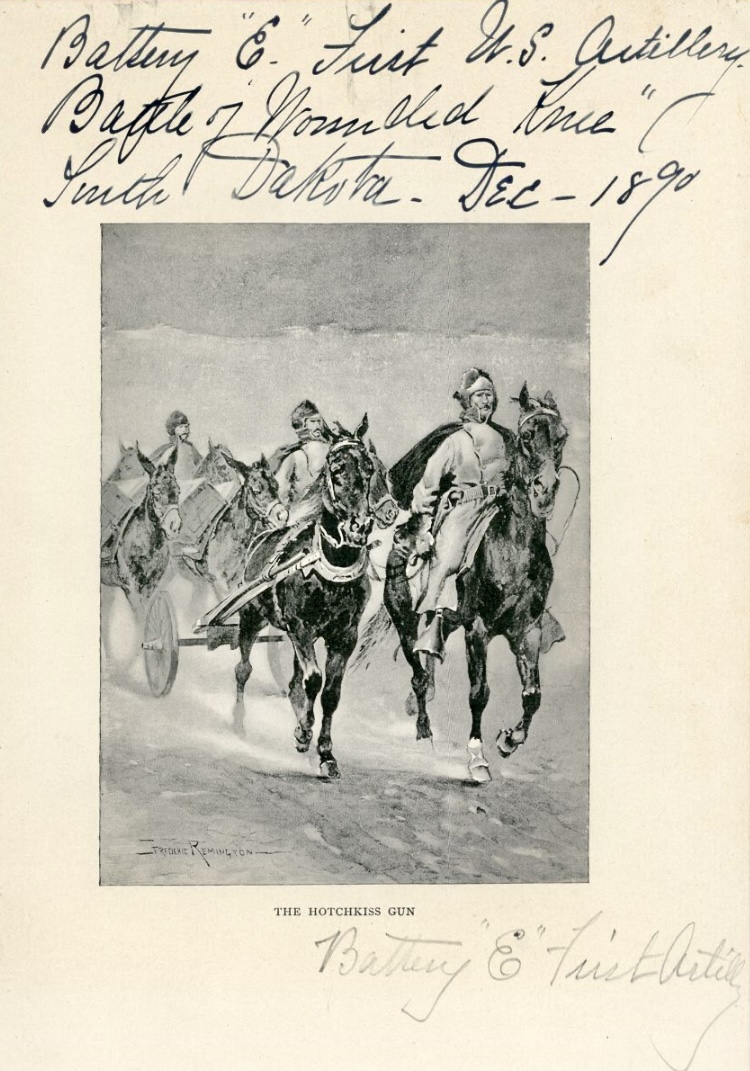
American gunmaker Benjamin Berkeley Hotchkiss (1826-1885) built a factory in France in the mid-1800s, where he would create a “revolving barrel gun”—the precursor to the machine gun—known as the “Hotchkiss.” Artist Frederic Remington drew an image of the military leaving the dead behind at the Wounded Knee battleground with the Hotchkiss in tow. Image is in the public domain and available at the National Archives.
“After he reached the top of a ridge, Black Elk saw soldiers ‘riding along the gulch and shooting into it, where the women and children were running away and trying to hide in the gullies and the stunted pines.’ Black Elk charged the soldiers and was able to rescue the women and children he had seen running. He was joined by other warriors arriving from Pine Ridge. Black Elk told Neihardt:
“We all charged on the soldiers. They ran eastward toward where the trouble began. We followed down along the dry gulch, and what we saw was terrible. Dead and wounded women and children and little babies were scattered all along there where they had been trying to run away. The soldiers had followed along the gulch, as they ran, and murdered them in there. Sometimes they were in heaps because they had huddled together, and some were scattered all along. Sometimes bunches of them had been killed and torn to pieces where the wagon guns hit them. I saw a little baby trying to suck its mother, but she was bloody and dead … After the soldiers marched away from their dirty work, a heavy snow began to fall. The wind came up in the night. There was a big blizzard, and it grew very cold. The snow drifted deep in the crooked gulch, and it was one long grave of butchered women and children and babies, who had never done any harm and were only trying to run away.
“Some 250 Miniconjou perished, along with 25 soldiers. The military sent a burial party to Wounded Knee a few days later and deposited the remaining bodies in a single, mass grave. Several photographers accompanied the burial crew, and images of the carnage were carried in news accounts across the globe. A picture of the body of Spotted Elk, knees bent and arms akimbo, frozen in the snow, would become emblematic of the slaughter.
“The butcher of the Miniconjou at Wounded Knee is pivotal in understanding the contemporary Sioux perspective. Historian Pekka Hamalainen writes that [my relatives] resisted the ‘hard, paternalistic grip’ of the federal government that absorbed their lands and then divided and sold off parcels to homesteaders. ‘The federal government had abandoned its obligation to protect indigenous property for a distinctively colonial land policy’.”
Excerpt from Cynthia-Lou Coleman, 2020, Environmental Clashes on Native American Land: Framing Environmental and Scientific Disputes (Palgrave-Macmillan). For more see the publisher’s link.
Postscript: Nineteen Medals of Honor were awarded to US soldiers for their actions during the Wounded Knee Massacre, according to CNN. At the time of this writing, the medals remain intact, despite efforts to rescind them.
Thank you for listening.
29 December 2025
You can also find my blog on substack, which will house my future posts. Meantime, I will keep the WordPress account and double-post. Here’s the link


 Cynthia (Ištá Tȟó Tȟó) Coleman Emery's Blog
Thank you, Cynthia. May we always remember.
LikeLike