Break the Rules

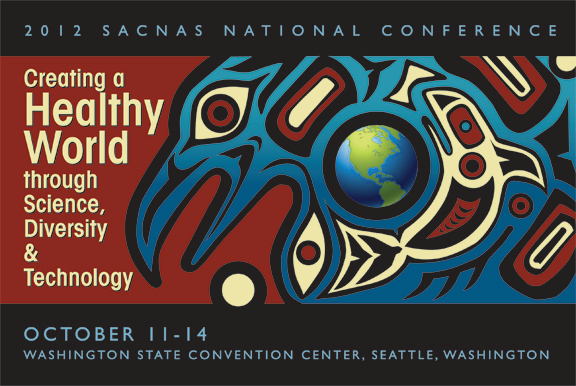
Students and scientists gathered in Seattle last week to talk about how to succeed in their careers—not only as scientists—but as American Indians and Hispanic individuals.

So I was honored to speak about science communication that impacts Indian tribes and share my blogging stories at the annual SACNAS conference (Society for the Advancement of Chicanos and Native Americans in Science).

The organizers asked me to talk about writing essentials for online media—how do you tell your story? How do you reach audiences? Continue reading

Posted in authenticity, framing, Native Science, science, science communication, social media, Uncategorized, writing | Tagged , , , , | 1 Comment

Penny for your Thoughts

Context is everything.

Take beauty for example.

An attractive woman may look gorgeous in a sea of homely men. But lumped together with a hundred other beautiful women, it is much more difficult to single her out as the most fetching. Continue reading

Posted in journalism, science, science communication, writing | Tagged , , | Leave a comment

Use Columbus Day to Confront Stereotypes

Columbus

Monday ushers in Columbus Day, an event that irritates indigenous folks in North America.

Particularly vexing is the well-worn trope that Columbus “discovered” the continent.

Christopher Columbus offers a convenient target for our wrath but I can think of many other individuals who have caused grief among tribal people. Continue reading

Posted in authenticity, ethics, Indian, Native Science, science, science communication, writing | Tagged , , , | 55 Comments

When Research Creates Origami

The New England Journal of Medicine went out on a limb with an editorial that advised readers to let the data speak for themselves.

And ignore the funding source.

Jeffrey M. Drazen’s September 20 editorial says that a study’s “validity should ride on the study design, the quality of data accrual and analytic processes, and the fairness of results reporting.”

Not, he writes, on the funding source. Continue reading

Posted in authenticity, ethics, health, science, science communication, writing | Tagged , , | 3 Comments

Grab the Red Pencil

When I was a newswriter my editor threatened us with bodily harm if we made an error.

You’d get fired for misspelling someone’s name.

Seems today we are much more cavalier about accuracy and precision. Continue reading

Posted in journalism, writing | Tagged , | 1 Comment

You are Your Brain

Our brains serve us well, remembering that tigers are fierce and blue-black berries are poisonous.

But our brains fool us.

We lock down on stereotypes: all tigers are fierce. All blue-black berries are poisonous.

And we do that with people, too. Continue reading

Posted in authenticity, framing, science, writing | Tagged , | 4 Comments

Science of Lies

There are lies others tell us and there are lies we tell ourselves.

What is the science of lies?

Recently journalists have invoked neuroscience to explain everything from women’s orgasms to the Republican brain.

An article I read this week distilled the Republican platform as “equal parts truth, omission, chutzpah and lies.” Continue reading

Posted in authenticity, censorship, ethics, framing, health, journalism, news bias, science, science communication, writing | Tagged , , | 2 Comments

Vagina, Male Style?

The Economist carried a review of Naomi Wolf’s new book, Vagina: A New Biography, and I remarked to my honey that the British news magazine has a male voice.

How can you tell, he asked?

You can just tell, I said.

The discursive style is male: crisp, clean, exact. Like Ernest Hemingway’s writing. Continue reading

Posted in authenticity, censorship, framing, journalism, news bias, science, science communication, writing | Tagged , , | 1 Comment

Amuse Yourself

Ira Glass

I was fortunate to meet Ira Glass at a question-and-answer session for journalism and communication students before his public talk in Portland Sunday.

The students’ questions were, in a word, wonderful, and Glass nimbly answered with unrehearsed charm.

His advice to students was to find a profession where they could be amused. The secret, he said, was to discover something that keeps you interested; that keeps you amused. Continue reading

Posted in authenticity, journalism, writing | Tagged | Leave a comment

Organic vs. Conventional Food: No Difference

Media folks are buzzing this week over a Stanford study about the nutritional differences between organic and conventional foods.

The study found almost no differences. Continue reading

Posted in NAGPRA, risk, science, science communication, writing | Tagged , | 5 Comments