Jumping Frenchmen and Science

Lumberjack

I live with a fellow scientist and we share a gallows sense of humor. Gallows as in scaffold for the hangman.

This comes in handy as we prepare for autumn’s arrival and a spooky Halloween.

The prankster in me allows me to hide in a corner and pounce at the unsuspecting passer-by, and my scientist-honey told me that some folks are so touchy when they get spooked they can leap skyward. Continue reading

Posted in authenticity, health, science, science communication | Tagged , , | 1 Comment

Season of Persuasion

Generic happy brochure people

As voting season approaches I’m acutely aware of efforts to persuade me.

So when I received a colored brochure in the mail yesterday I quickly scanned the cover for the key message.

It looked like an ad for a new mall. Several tag lines appeal to Middle Class values: Continue reading

Posted in authenticity, ethics, framing, health, Indian, Uncategorized | 3 Comments

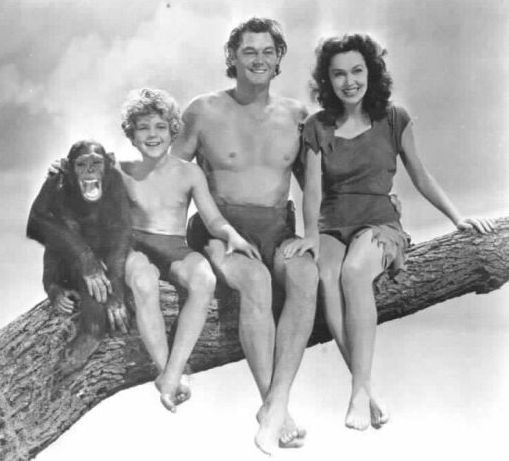
Tarzan and Ass Covers

Recently I wrote how my honey described a woman’s skirt as an ass cover, marveling at his lack of correct vernacular when it comes to women’s clothing.

So imagine my mirth when he described my sleeveless silk blouse. I have a cool summer blouse I wear for work: a little billowy with a ruffle: a little playful. Pretty.

I was still wearing it when he floated home from work. Continue reading

Posted in authenticity | Leave a comment

When Indians are invisible in science

When are American Indians invisible?

As a critic of mass media and Indian representations, I am mindful of the gross caricatures that persist.

Pocahontas. Chief Wahoo. The Land O’Lakes butter maiden.

These are memorable images of Indians. Continue reading

Posted in authenticity, Indian, Native Science, science, science communication, writing | Tagged , , , | Leave a comment

Science, TV and Authenticity

Geronimo

This past week scholars gathered in Chicago to share their research and insights into mass communication.

I walk along a thin line between science and culture, hanging with folks who study science in one corner of the universe, and spending time with others who foreground American Indian cultural issues. Continue reading

Posted in authenticity, human origin, Native Science, science, science communication | Tagged | 1 Comment

Rez Life: What standards do we use?

My colleague John Sanchez (Apache) has studied the ABC TV documentary that aired in October called Children of the Plains, which focused on life at Pine Ridge.

Sanchez reported his findings this past week in Chicago at the annual conference for folks who research mass media.

Sanchez wondered why the ABC news team focused on poverty, alcoholism and suicide at the Indian reservation. Continue reading

Posted in authenticity, framing, Lakota | Tagged , , , | Leave a comment

How the Press Covered the Sea Lion Controversy in Indian Country

Next week we present results of our study at a national conference in Chicago, sharing details of how the press covered the salmon and sea lion conflict at the Columbia River.

Local Indians have a great stake in the salmon fisheries, a center piece to their culture and livelihood.

Portland State alum Tess McBride, principal author, looked at news coverage over more than 6 years and learned that tribal members have little access to the channels of communication. Continue reading

Posted in authenticity, framing, Native Science, salmon, science, science communication, Uncategorized | Tagged , , , | 4 Comments

Salmon and Sea Lions Face Off

Native Americans are keenly interested in science. Just ask an Indian fisherman.

Here in the Pacific Northwest, tribal fishermen have been embroiled in a controversy over salmon.

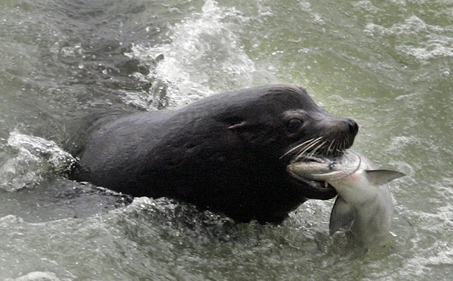
The most recent tempest has pitted salmon against encroaching sea lions, who feast on fish at Bonneville Dam.

And fishermen are angry.

Each year, more and more sea lions swim upstream from California to munch on the salmon who return to spawn. Local tribes estimate that sea lions take a healthy percent of the salmon—an important part of their culture, livelihood and history.

And while the salmon are a protected species, so are many of the sea lion species. Many pinnipeds are listed as endangered species, so getting rid of them requires a court order—-literally.

Stakeholders are divided, with some—-like the US Humane Society-—claiming an interest in the welfare of the sea lions. Other groups, including state governments, favor removing the sea lions to keep salmon populations intact.

Salmon numbers in this region dwindled dramatically after dams were constructed in the 1903s, with some species close to extinction. Recovery efforts have helped replenish the rivers, but salmon have never rebounded entirely even with scores of scientists working full-time on salmon sustainability.

When the courts approved removal of the sea lions—-even through lethal means—-the issue grabbed news headlines and my team went to work, searching the news for prominent frames and recording public opinion on the issue.

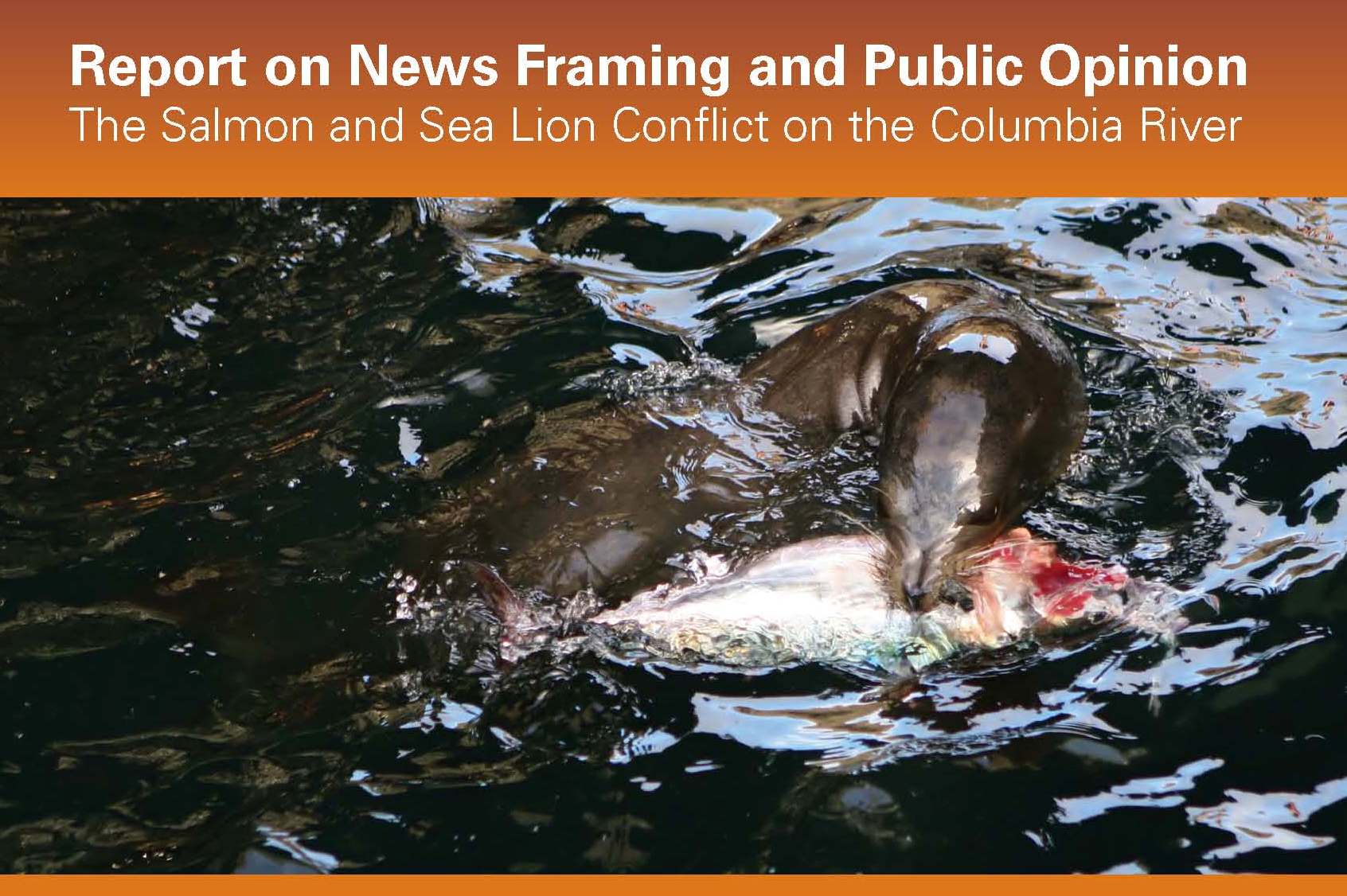
We’ve just published results of our studies which I will detail in the blog all week. For an advance copy, I’ve uploaded the report:
Report Web Optimized

Posted in framing, health, Native Science, risk, salmon, science, science communication, Uncategorized | Tagged , , , , | 1 Comment

When Science Meets Superstition

We can’t help but be a tad superstitious when it comes to our well-being.

Including me.

Human nature lets us take credit when good things come our way: we think we somehow deserve it. But when bad juju befalls us, we shove away ownership.

It’s bad luck. Poor timing. Forces of the universe.

So when I found a spider stuck to a dish I was packing for a household move, sandwiched between some vintage bowls from Indian ancestors, I figured it signaled good luck.

Spiders are good medicine for the Osage. Fortune smiled.

But I’ve also felt superstitious–my days darkened by histories that punctuate our past.

I was diagnosed with a lung infection two years ago. The infection is like tuberculosis and, with a bit of luck matched by science, it should clear up after 24 months of taking antibiotics every day. Every single day.

And I couldn’t help but draw a connection to my Osage relatives. My mother courted lung problems in her fifties, succumbing to sarcoidosis, a disease you only hear about on episodes of House. The disease robbed her of breath and mobility.

And that’s not all.

Her mother–my grandmother–contracted tuberculosis like many young Indians. Doctors removed one lung that left her tilted and stooped.

That means three generations of Osage women in my family have been slowed by lung disease. And I wonder if it’s coincidence.

No matter the years of scientific training, having a cool eye or blessed with linear thinking, I still find magic creeps into my thinking.

And spider? It’s a good omen.

Originally posted on Wellbound Storytellers, http://wellboundstorytellers.com/2012/07/when-superstition-confronts-science/
Posted in authenticity, health, Indian, science, science communication | Tagged , , | Leave a comment

The End of Science

Is it the end of science as we know it?

You might get that impression if you read through the sheaf of articles following the discovery in July of the Higgs Boson.

After learning Higgs Boson wasn’t a wayward sailor from Berkshire, I started reading the popular press about the discovery called the search for the god particle. Continue reading

Posted in risk, science, science communication, Uncategorized | Tagged , | 1 Comment