For Molly
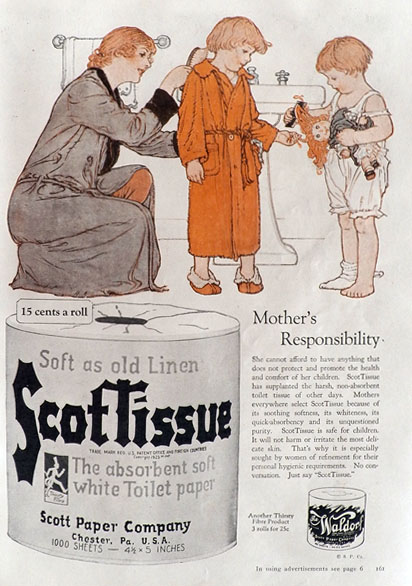
The eponymously named toilet paper
Seems toilet paper has become front and center.
I got somewhat obsessed during my recent visit to India.
After just a few days on the journey, I ran out of the purse-packet size of Kleenex I brought for the trip, and ended up stuffing my bag with fistfuls of toilet tissue from our hotel.
The reason?
Most public toilets in India avoid paper altogether (it clogs the drain) and users rely instead on a blast of cold water from a hose in the loo.
The method is simple and basic, unlike the porcelain bidets of my youth, growing up overseas.
Bidets were commonplace in homes and hotels in the Middle East and Europe, where they’re plumbed right next to a Western toilet in high-class bathrooms.
Experts are uncertain how the term “bidet” evolved.
Oxford says the French term refers to a pony, and the verb (bider) means “to trot.”
The word takes on a new meaning when you consider our expression for “tummy” troubles when we lived in Iran: we called them the “Teheran trots.”
As kids we would play with the bidet’s many knobs and shoot water into the air, rather than using it for the intended nether regions.
My husband loves the method, but I prefer paper.
And handi-wipes. And towels. And warm water.
Hotels in India stock toilet paper, but in small bundles.
New rolls are about one-quarter the size of our American rolls.
Turns out an Indian toilet roll fits snugly into my purse, so my fears of running short were assuaged.
As a young lass I made objects from toilet paper.
My sculpting career started because I was never sleepy at nap-time and, in the evenings, I stayed awake long after night lights were switched off.
While my sisters slept, I invented songs and stories, or I’d sneak off to the bathroom where I discovered I could fashion little animals from fresh toilet paper, soap and water.







 Cynthia (Ištá Tȟó Tȟó) Coleman Emery's Blog