
 You know the routine.
Homer Simpson is barely paying attention to his wife, Marge, and the cartoon bubble alerts us to his thoughts:
Blah, blah, blah, blah.
Homer perks up when he hears something that grabs his attention:
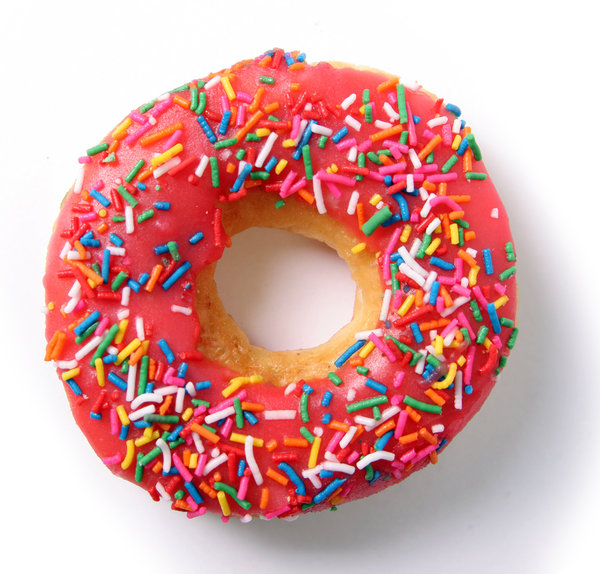
Blah, blah, doughnut.
My mind does the same thing when I listen to a zen lesson.
Like Homer, I hear blah, blah, blah, blah.
My brain fails to wrap around the lesson.
While my Beloved calmly slips into a mindful meditation, my brain scurries off to a mental playground.
While he relaxes with his breath, I’m playing hooky, floating on a swing-set in the playground of my mind.
The confusing lesson talks about how there’s no dichotomy.
Things aren’t truly separate.
Take two bowls, for example.
Fill one with grain. Leave the other empty.
One bowl looks full and the other looks empty.
The comparison of full and empty may seem dichotomous, but the lesson asks you to look at the relationship of each bowl to its context.
One bowl seems full of something and the other seems full of nothing.
But what if you consider that nothing isn’t nothing?
The empty isn’t lacking grain: it contains the empty.
Time for a doughnut.
Copyright-free image from http://www.rgbstock.com


 Cynthia (Ištá Tȟó Tȟó) Coleman Emery's Blog