American Owned

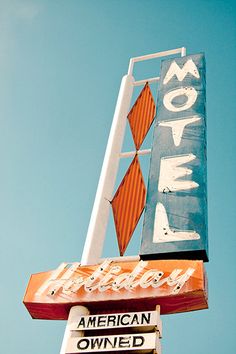
best sign american owned

Code for Whites Only

Somewhere between here and Gallup is a Raffi musical tape by the road, thrown overboard after too many renditions of Baby Beluga.

During my graduate school years we travelled across the USA by car, loaded with two wee lassies, fruit juice and car games.

We zig-zagged to Ithaca and Madison, visiting relatives and stopping by pow-wows during summer months.

While driving down Route 66 past cactus and lizards, we’d look for hotels with air conditioning and swimming pools.

During our travels we noticed signs on hotels and motels that read, “American Owned,” “American Hospitality,” and “Genuine American.”

As a member of the Osage Tribe, I figured the hotels must be owned by Native American business-folk.

Fat chance. Continue reading

Posted in advertising, american indian | Tagged | 1 Comment

Want loyalty? Get a dog

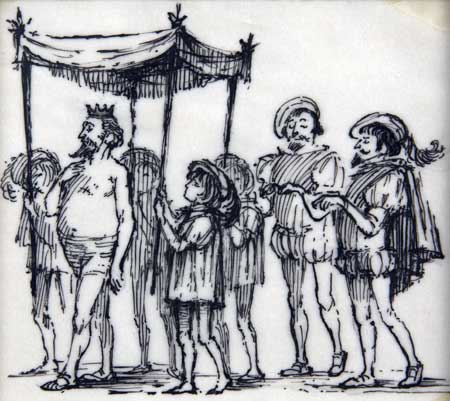
empror

Imagine there’s been a shake-up at your job and you’ve inherited a new boss.

Let’s say your job is one where you advise the boss on communication matters: everything from relationships with your consumer publics, to relationships with the mass media.

In the weeks since his hiring, your new boss schedules talks with all employees, one-on-one, and it turns out he expects a pledge of loyalty from each individual.

You sit down with your boss and the conversation goes something like this, with your boss asking:

Will you pledge your loyalty to me?

You think carefully about your response.

Your job requires you to be honest with your publics, your administration, and with those who put their trust in you.

You don’t want to upset your boss or lose your job, but you figure your job can’t exist without honest relationships.

So, instead, you reassure your boss that you will always be honest with him.

Your boss replies:

But I need your loyalty.

And you repeat your promise:

I will always be honest with you.

This week The New York Times ran a story that described a similar encounter between the US President and James Comey, then-head of the FBI. Continue reading

Posted in american indian, authenticity, communication, politics, politics | Tagged , , , | Leave a comment

Doggone

Romeo sybylla

Photo by Romeo by Sybylla Lindert

Our pup, Romeo, would creep downstairs in the morning just before 5 a.m. and lay on our bed, waiting for breakfast.

He wasn’t allowed to sleep with us but we couldn’t prevent him from snuggling next to me while I was recovering from lung surgery a few months ago.

I spent a day or two in bed, sleeping, and Romeo appointed himself my guardian.

Although he wasn’t a cuddler, he would nudge his small frame right next to mine, listening to me breathe while my lungs mended.

When we walked in our neighborhood he would run into a fence post or curb from time to time, because he could hardly see, a result of greyhound aging.

He’d stumble, then yip, and carry on in search of a pee-worthy patch of grass.

Passersby wondered if I was dragging my poor pooch who could barely keep up with my stride.

We took him to the veterinarian when he began to shun his food and she figured that, with more than 15 years under his collar, Romeo was, like Hamlet, ready to shuffle off his mortal coil.

We took him home, where Romeo would take a drink from a glass of water I’d hold under his snout and nibble on a piece of bacon.

Mostly he slept.

His heart slowed ever so gently and his departure was full of grace.

I kept his toys and bedding in the house for days—then weeks—not ready to confront his absence.

I miss him most when I arrive home from work and when I rise before the sun.

Romeo1

Sincere thanks to Portland-based Compassionate Care, which offers in-home care for dying pets, and to our superlative veterinarian, Irvington Veterinary Clinic.

6 May 2017

 #cynthialcoleman

 #nativeamericanwriter

#nativescience

#presson


Posted in american indian, death, dying | Tagged , , | 5 Comments

You can lead them to water…

8839ef8524e18cb92aba82dc66a4fb19

But can you make them think?

I’m delighted speak to the folks at US Fish & Wildlife Service today (April 25, 2017) on the topic of science communication.

Truth is, I’m honored to be invited.

Most people’s eyes glaze over when they learn that I teach, study and talk about…science.

So it’s a real treat to speak with folks who have already tasted the Kool-Aid.

I’ve learned that, in order to engage someone’s attention, I need to trick them by camouflaging science.

I know that sounds weird, and you may be thinking:

My expertise is science, and you’re telling me not to talk about science?

I hope this isn’t an awful betrayal, so let me give you five lessons that you may find useful when approaching audiences about the scientific side of life.

Lesson 1. We often misunderstand what someone else is asking and sometimes we hear what we want to hear.

Lesson 2. When we contrast scientific views against anti-scientific views, we have nowhere to go: the conversation reaches a dead-end.

Lesson 3. Sometimes it’s not about science.

Lesson 4. We all suffer from cognitive bias and we don’t see the full picture when we make decisions.

Lesson 5. Tell a story.

Today I will flesh in the details of the lessons at the keynote talk.

8839ef8524e18cb92aba82dc66a4fb19

Stay tuned.

24 April 2017

 #cynthialcoleman

 #nativeamericanwriter

#nativescience

Posted in american indian | Leave a comment

Muggles for Science

march for science

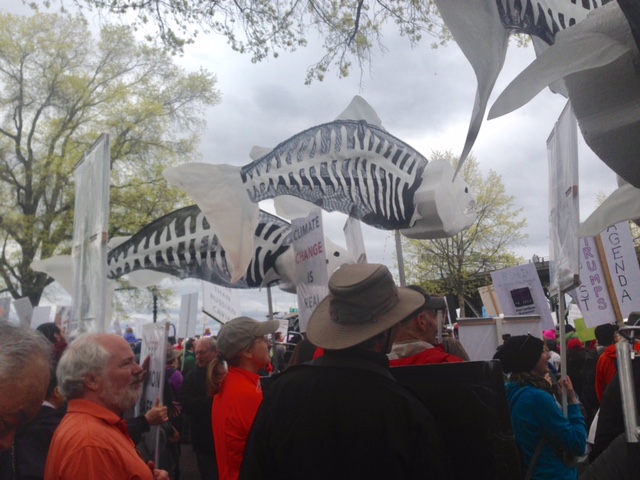
Portland’s March for Science (Photo by C Coleman Emery)

Why we need politicians who are vigilant

We took to the streets Saturday (April 21, 2017) to join the March for Science.

Thousands met in downtown Portland at the waterfront to hear speakers try to raise our emotions about science before our orderly walk began through four usually-busy-streets now safely cordoned from traffic and free of onlookers.

The light rain in the early hours yielded to bursts of sunshine, revealing a range of signs carried by marchers: some hand-written and messy, and others professionally printed on shiny placards.

One group sported a school of salmon executed with mesh, fabric, paint and carved Styrofoam.

The three-foot fishes swam above the crowd, hoisted on backpack frames sported by the puppeteers.

Their message: Keep salmon safe

Other messages read:

Science not silence

Fund the EPA

Got polio? Me neither. Thanks, science

Some slogans were political and hammered at poor decisions fraught with opinion rather than fact. Continue reading

Posted in american indian, Climate change, communication, salmon, science, science communication, writing | Tagged , , , , , , | Leave a comment

Pets for Supper?

grasshopper

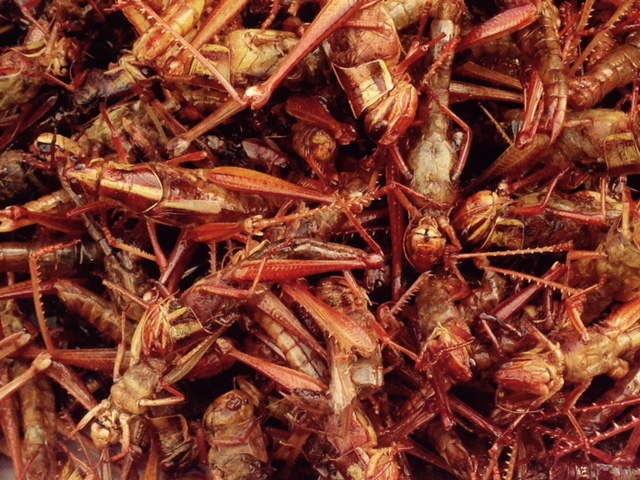
Ready-to-eat grasshoppers in Bangkok

Feasting on Bugs, Bunnies & Dogs

Some folks dine on dog-meat.

In Indonesia, raising dogs (and cats) is practical, according to a recent New York Times article.

Dogs and cats “require far less space and feed resources than growing cows,” says a researcher in the article.

The story gave me pause as I recently returned from a trip to Asia.

I’m pretty sure I avoided dog and cat meat during my visit, but I found plentiful fried insects in the Chinatown section of Bangkok.

Eating insects, dogs, pigs, cows, rabbits—the practice shouldn’t seem odd to travelers of the world.

When I visited China several years ago our youthful tour guide was keen on the prospect of capitalism, and described himself as an entrepreneur.

He explained that he was going to start a new venture, raising dogs for food, and I asked him what type of dogs.

Without a trace of irony, he replied, “Chow dogs.”

My Lakota relatives face jokesters because of their custom of eating dogs. Continue reading

Posted in american indian, Bangkok, Francis Parkman, Lakota, writing | 2 Comments

When Honor Meets Disrespect

blog pic

Cultural Mores & Travel

I gasped when I spotted a bloke on the river boat in Thailand.

His baggy sleeveless top–sometimes called a muscle shirt–revealed a black-inked Buddha covering the whole expanse of the left side of his front torso, from shoulder to his (I think) hip.

He was youngish Anglo-man–maybe late twenties or early thirties–from an indeterminate country: US? France? England? Australia? Germany?

My surprise arose because Buddhist countries like Thailand, Sri Lanka, Burma and others, consider wearing of the Buddha–on clothing or bodies–disrespectful.

Of the highest order.

Buddhist temples in Bangkok, for example, display signs that warn about body tattoos,  bare shoulders, uncovered legs, shoes, hats, and poor behavior, such as climbing on statues. 

At the most popular temples, workers will hand you a cotton robe to cover your body if your clothing is indiscreet.  Continue reading

Posted in american indian, authenticity, Bangkok, family values, immigration, Indian, native press, Native Science, nativescience, Vacation, writing, zen | Tagged , , , , , , | Leave a comment

Krabi 

Krabi is a mecca for tourists from all over: we’ve heard Dutch and German, Japanese and Mandarin, French and Slavic, and British-Canadian-Australian English.

Thailand’s beach communities feel like similar world hot-spots: Miami in Florida and Antalya in Turkey.

Vendors bark their wares: cold drinks and massages in the markets, and, on the sea side, long-tailed boats sell coconut water, coca-cola and smoothies.

People of all girths and tattoos parade on the beach: grandmas in bikinis and children with ballooned swim-fins.

We slather on 50-plus sun block and, from time to time, sympathize with the pink-hued sunburned newcomers. 

Some of the women sport belly-button art and others are adorned with false eyelashes.

You can tell the long-timers by their bronzed skin, but we found suntans don’t necessarily make you more attractive, just more chargrilled.

We discover fruits galore to munch: pineapples, papaya, mango, dragon fruit, apples, oranges and bananas.

Fish is ubiquitous: more shrimp than we’ve ever eaten, and sea bass, sea snakes and squid. 

So meals are a combination of noodles and rice with seafood, chicken or pork.

But even the Thai beaches can’t get away from hamburgers and pizza.

Our hotel staff folk are sweet and kind, unlike the beach-staff who face rude foreigners daily.

In contrast, our getaway–the farthest from the beach yet only a 15-minute walk–is peaceful and bucolic, perhaps because wine at dinner is the only alcohol sold.

But plentiful bars dot the landscape, encouraging folks to par-tay

Hip-hop and reggae tunes entice the land-lubbers, who can take advantage of Happy Hour starting at 2 p.m.

Tucked under our mosquito net, we rise at 6 a.m. when birds begin their arias and the long-tailed boats rev their engines. 

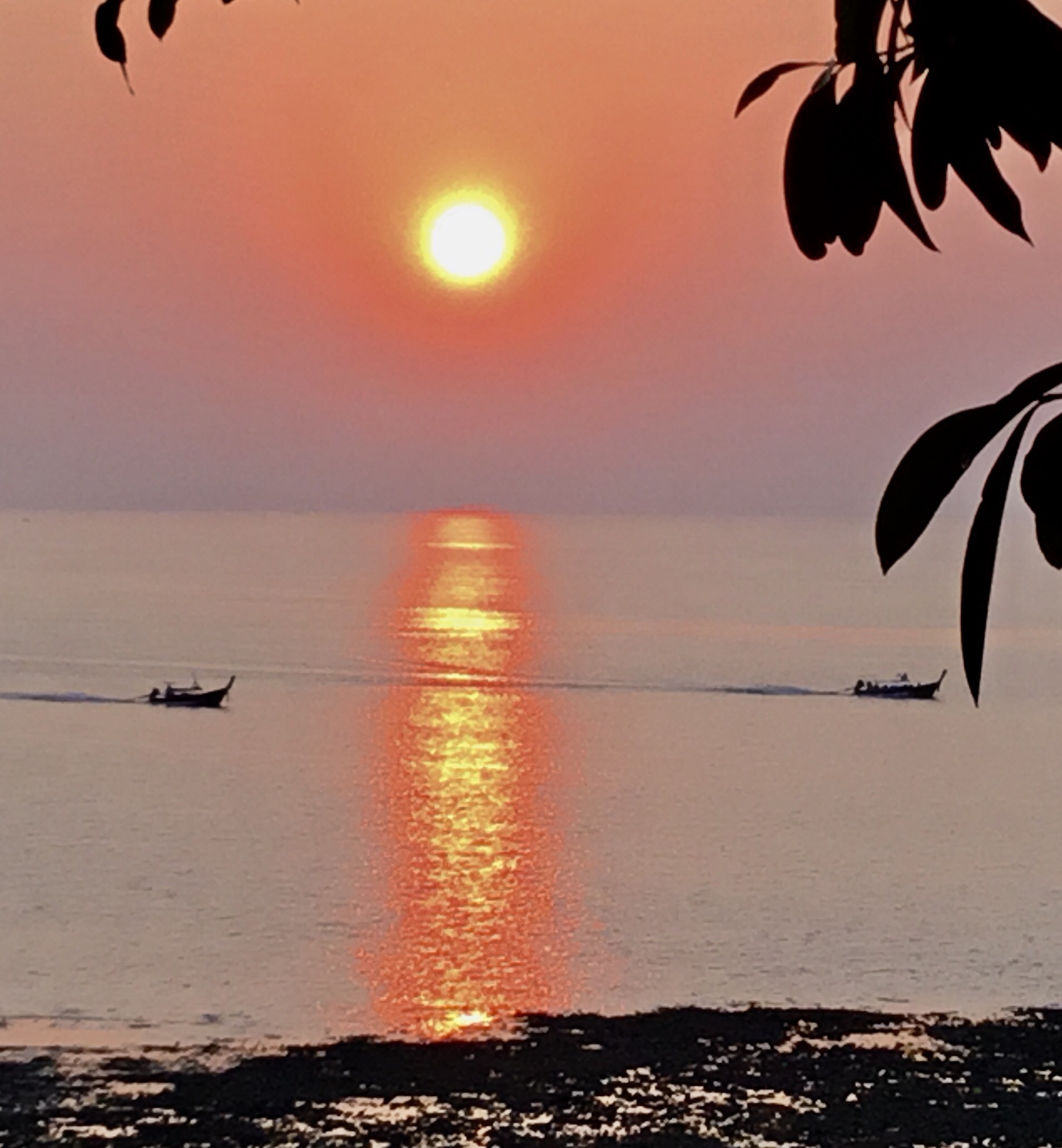
We sit on the deck with hot drinks and watch the sun rise from the sea while the boats cut through the waves, making a picture-perfect postcard. 
19 March 2017

Krabi, Thailand

#nativescience

#nativewriter

#cynthialcoleman

Posted in american indian | 2 Comments

Oh! To be a Bug!


Poseidon’s Descendant

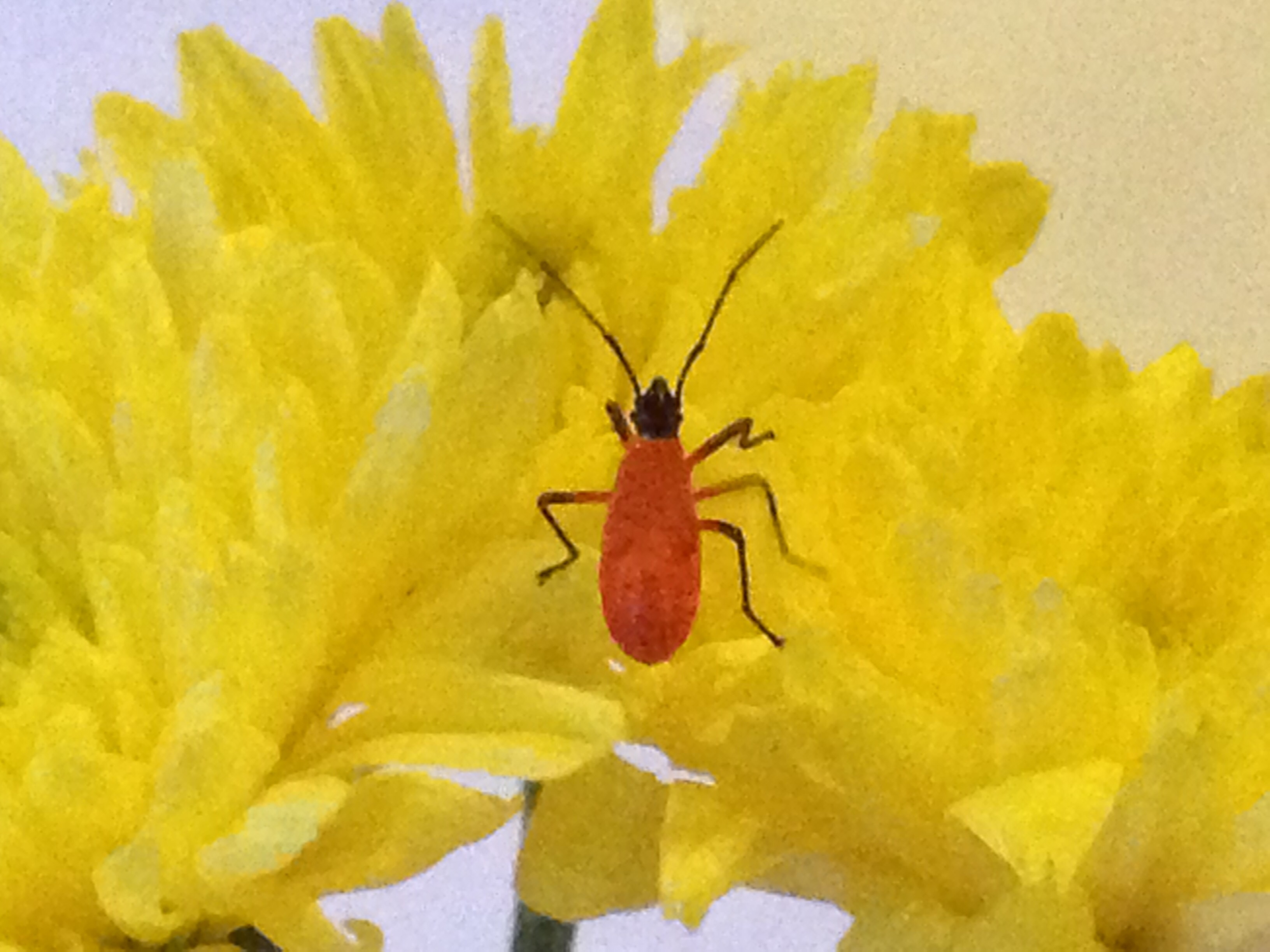
We discovered an orange bug crawling on our tablecloth as we sat down to a Thai dinner in Krabi. 

The bug scuttled right on top of a swath of orange and white gingham. 

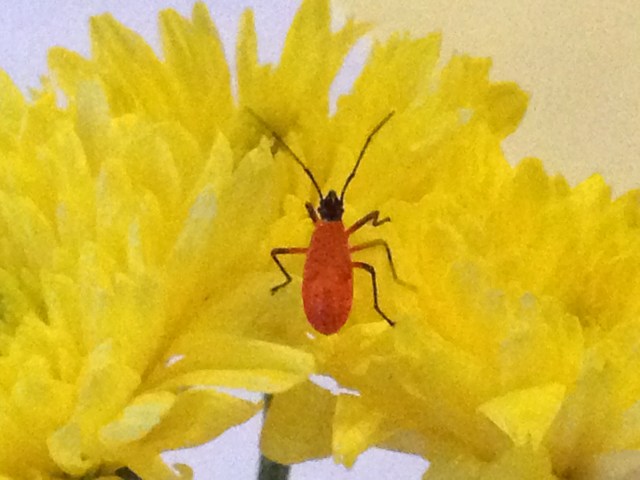
The beetle had an orange-winged back and black head, and what made its visage most striking was the super long antennae. 

I played a bit with the beetle, as it marched up and down my hand, and then I gently lifted it onto the small vase of yellow chrysanthemums on the table.

The beetle soon rested and began grooming.

It began with its antennae, pulling at the right one with two fore arms and then the left. 

The beetle started at the base and then moved its arms down to the top of the antennae. 

The bug then cleaned its hind legs, two on the right side, and one on the left. 

So the critter had five appendages, missing a sixth on its left side.

The beetle posed for several photos and remained our dinner companion all evening.

The orange critter is likely a member of the Cerambycidae: the longhorn beetle (but the web says the “cosmopolitan family” is hard to distinguish from the Chrysomelidae–the leaf beetle–like a ladybug.)

Our cosmopolitan dinner guest–whomI believe to be a long horned beetle–is named for the Greek descendent of Poseidon.

Cerambus–grandson of Poseidon and the son of Euseiros and a nymph, Eidothea, was a shepherd with a sweet singing voice, according to Wikipedia.

Cerambus grew arrogant, according to the legend, and dishonored the nymphs who cared for him.

So the nymphs changed him into a beetle, whose name Cerambycidae honors Cerambus.

Gregor Samsa suffered a similar transformation in Frank Kafka’s 1915 book, Verwandlung, or Metamorphosis

Gregor awoke one morning to find himself an insect, which novelist Vladimir Nabokov (an entomologist) insisted was not a cockroach but a flying beetle, not unlike the orange bug on our dinner table. 

Although Kafka’s character suffered greatly as a result of his mutation, our dinner guest seemed at perfect ease.


17 March 2017

Krabi, Thailand

Image of Kafka’s Metamorphosis from Tablet magazine

[Please forgive misspellings I am unable to correct]

#nativescience

#cynthialcoleman

#nativewriter


Posted in american indian | Leave a comment

Swimming in the Emerald Sea

Krabi, Thailand

We wake about 6 a.m. just before the sun clears the horizon, and the sky begins to brighten. 

We keep our silk drapes open so we can climb out of bed and sit on the deck when dawn starts to break. 

The sun bursts through around 6:30 and we can see the longboats cut across the shimmering reflection in the sea. 
Our room is nice and cool, thanks to the air conditioner, and we sleep under a tent of white mesh tulle to keep mosquitos at bay. We take malaria medicine just in case.

On the deck it’s warming up for the day–maybe 80-degrees Fahrenheit–and humid. 

Feels like rain with the heavy air but not a rain cloud in sight. 

We have an electric kettle we fill with bottled water and I have my Lipton yellow tea with some sugar while Honey drinks a half-cup full of instant Nescafé with powdered creamer and sugar substitute. 

We sit and watch the sun and the boats, and I shoot photos. 
Sometime after 7 a.m. we walk down the pathway to the restaurant: a large outdoor area with a thatched roof: most of the tables are under the roof and many are arranged outside, where we have a view of the huge stone outcroppings in all the tourist pictures of Krabi. 

We look for a table outside–away from the smokers–while you cannot smoke in enclosed areas in Bangkok, here in Krabi there are many smokers in the outdoor eating areas. 

I wear my silver lung necklace to ward off the bad spirits and hope that the breeze will carry away the smoke. 

We find American-style coffee–nearly strong enough for Portlanders–and heaps of papaya, dragon fruit, melon, bananas and pineapple. 

There’s yogurt and candied dried fruit and–for the Europeans–edges of aged cheese and sliced meats. 

There are also cold vegetables including cucumbers, hunks of yellow corn, sliced bell peppers, hot peppers, and sliced tomatoes. 

Then I spy three covered silver trays with warm hotdogs and pork and mixed vegetables and tomatoes. 

In the corner a chef prepares eggs any style and I decide on a cheese omelette today instead of the pile of French toast and pancakes. 

In the corner is a toaster and slabs of bread and homemade baby croissants with choices of butter and honey and jam. 
After breakfast we head off for the beach–a 30-minute walk to limestone structures and caves, and a brilliant emerald sea. 

Many tourists with cigarettes and tattoos sun on the beach and we find a shaded spot for our bag and towels and swim several hundred meters to a large rock outcrop (where we can stand rather than tread) and spy three blue-grey herons, each about the size of a cat. 

Their bills and feet are bright yellow. 

The water is warm and refreshing and salty, and, after lazing about, we take our sandy feet and eat a Thai lunch before trekking back to our cool hotel. 

I pick up some bleached white shells and a few pieces of white coral. 
We shower and read a little. 

I write some postcards and we sit by the beautiful sleek swimming pool and drink water and mango juice. 

At about 5:40 p.m. we shower again and head for dinner at our hotel restaurant. 

About four workers wait on us–the restaurant isn’t very popular for the guests (we think its because there’s only wine and nothing else alcoholic) and we enjoy the attention and the food: seafood soup for me and chicken larb for Honey. 

I find an orange beetle on the orange gingham table cloth and we watch it cleanse its antenna and pose for photos. 
16 March 2017

Nativescience

Nativewriter

Cynthialcoleman
Posted in american indian, authenticity, Bangkok, communication, framing, native american, native press | Tagged | Leave a comment