Environmental Issues in Indonesia

I was thrilled to spend a chunk of an afternoon in a virtual meeting with a group of writers, scientists, analysts and academics from Indonesia who work with communities on environmental issues.

My role was to offer some notes on my experience with environmental writing, teaching and research in mass media, but—to be honest—I learned more from the Indonesian experts than they learned from me.

The conversation took part courtesy of World Oregon, which brings together people from across the globe to “broaden and deepen public awareness and understanding of international affairs.”

A range of workshops, travel programs, zoom talks and meetings is offered throughout the year to local residents in Oregon and to visitors willing to zoom into meetings.

(Its mission is much like the Fulbright Program—funded by the State Department—that enabled me to spend a recent semester working on Indigenous issues in British Columbia as a visiting scholar.)

Perhaps the most striking element I saw during the meeting is the passion each person brought to the discussion.    

One of the participants, whose expertise is research, said she wanted to speak to me in her own language so I could hear the lilt of her cadence.

She said her efforts make her appreciate her country more and more: from the coastal ranges to the nation’s diversity.

[I’m not sharing names and identities because some of the participants receive threats because of the work they do.]

Palm Oil Culprit

Indonesia is a vast archipelago with 17,000 islands spread across an area of 734,400 square miles: about the size of Mexico.

And it boasts the world’s fourth largest population, behind China, India and the United States.

Another presenter remarked that change comes slowly, in part because the islands are widely spread.

Yet industrialization is chugging along.

Several speakers talked about their frustration over destruction of the country’s hardwood timberlands—including the famous mangroves—tropical rain forests, wetlands, wildlife and sea life for the sake of an economic boost. 

Wikipedia notes that Indonesia is now “the world’s third largest emitter of greenhouse gases” (a result of vehicles and industries) and that poor communities with high poverty rates are trading the country’s lush resources for short-term financial gain.

One flourishing industry is the planting and growth of palm tree plantations that produce a lucrative oil used in an array of products, including shampoo, lotion, soap, ice cream, chocolate bars, cookies, animal feed and biofuel.

Problem is, the plantations replace old-growth forests, which, according to Human Rights Watch, have been “decimated.”

“Indonesia lost 24 hectares of forest cover, an area almost the size of the United Kingdom” in exchange for the plantations, the organization notes.

Today, Indonesia is the world’s leader in crude palm oil production, even though the plant is native to Africa.

Another participant added that the destruction of the tropical forests has hit Indigenous peoples hard.

Such activities are documented in a Human Rights Watch report by researcher Juliana Nnoko-Mewanu, who says that Indonesia’s Indigenous peoples “have suffered significant harm since losing their ancestral forests to oil palm plantations.”

When residents refused to leave their communities, their homes were burned to the ground.

Forests have been irrevocably changed, the report says.

Indigenous Folks in the Cross Hairs

Many Orang Rimba (an Indigenous community in Sumatra) “are now homeless, living in plastic tents, without livelihood support” which disappeared when plantations appeared.

Once self-sufficient, the Orang Rimba “now live in abject poverty.”

Working with the Indigenous communities left one expert feeling “beaten and defeated.”

Government players appear to ignore environmental clashes, and Human Rights Watch reports “they have turned a blind eye to widespread forest clearance” resulting in a “human rights tragedy.”

Indonesia suffers from a “patchwork of weak laws…poor government oversight, and the failure of oil palm plantation companies to fulfill their human rights responsibilities,” which makes the task of pursuing environmental justice Sisyphean, according to the report.

Still, the small band of professionals I met is keen to make an impact on attitudes and drum up support among publics.

In a word, they have…guts.

Sharing Tips

World Oregon asked me to share tips I’ve learned that could help the group’s efforts in environmental integrity.

Here is the transcript of my notes:

I am honored to be invited talk with you today about some of the work I’ve done in environmental communication. And if you have questions after today, please feel free to email me; I would very much like to learn more about Indonesia: and I am confident I will be able to explore your beautiful country one day.

Today I’d like to give you a glimpse at three environmental issues we face in Oregon, which I hope will let us talk about ways that we can communicate about environmental issues more skillfully.

I will offer you a few hints—or—bullet points to help guide you with your communication efforts.

So, to begin, I’d like you to imagine three important features that affect all of us—and that we cannot live without:

•            Fire

•            Air

•            Water

Let’s begin with fire.

This week, Oregon’s governor, Kate Brown, wrote an editorial for The New York Times that is titled:

The West is on Fire.

It’s Past Time to Act on Climate Change.

Kate Brown wrote about how more than 600,000 acres have burned in Southern Oregon, and that 22 out of the state’s 36 counties were declared drought emergencies.

She notes that half of Oregon—30 million acres—is forest land.

What was her point in writing the editorial?

To put pressure on the the Federal government to act more quickly on climate change, and to improve infrastructure.

What we need now, she said:

“Is bold action from Congress.”

I’m bringing this to your attention to illustrate one way that you can get your stories out to mass media.

The Governor is smart: she’s taking advantage of an issue that has already captured the news, and adds another element to keep the issue in the public eye—an opinion-piece in the country’s leading newspaper.

This is something that you can do as an environmental advocate:

#1 Cultivate your networks

You can cultivate experts to write opinion pieces and letters to the editor to help present your side of the story, and this can be a way to reach important publics. For example, The New York Times is read by policy-makers and elected officials, as well as other news editors and reporters around the world.

Now let’s move from fire to air.  

Last year—just about this same time—Portland had the worst air pollution than any other city in the world—worse than Delhi or Beijing.

And while the air pollution story has been a big one in Portland, the deeper issue is that Portland has sustained poor air quality for decades.

The reason?

Like Indonesia, Oregon has industries that release—not hundreds—but millions of pounds of toxic chemicals that affect the air quality.

Despite Portland’s poor air—especially in neighborhoods with African-American, Native Americans and Hispanic populations—most Portland residents are not aware of the pollution.

How do I know?

One of my graduate students at the university where I teach wrote her master’s thesis on the disconnect between the quality of the air and the opinions of Portlanders—who consider the air…

Just.

Fine.  

Her research raises a really questions:

Do we want publics to know about air pollution, and…

How do you communicate with publics about air pollution?

This leads us to another query:

How do you communicate effectively about environmental issues?

One piece of advice comes from efforts to acquaint publics with climate change:

#2 Make it personal

Here’s an example from the Guardian newspaper:

Ella suffered from severe asthma. She grew up and went to school close to the busy South Circular Road in Lewisham, and had cough syncopea condition usually associated with long-distance lorry drivers who’d been driving for decades. She died at age 9.

You present a story that’s hard to ignore.

As an advocate, you can cultivate news stories for reporters that feature individuals. Reporters are always looking for human interest stories.

OK: we’ve covered fire and air.

What about water?

Oregon—like much of  the western United States—is short on water. Severely.

We are seeing some of the driest weather ever in our state, which has become critical in the Klamath River basin—an area that borders on two states: Oregon and California.

The problem is decades old, and it gets covered in the news media as a conflict with no solution.

The problem is that the resource—water—is scarce.

Water is currently being reserved rather than flushed through the dam where it can be accessed by stakeholders.

The local Native American tribes—in Oregon and in California—depend on the salmon and other fish whose numbers are dwindling rapidly.

For Native Americans, the fish are an essential part of life.

Fish have kept the Klamath and Yurok peoples alive “for all time.”

Fish represent life: We are “Salmon People,” one tribal member reports.

Salmon is more than food: salmon is life.

But the water that has dwindled in the Klamath River is also used for irrigating farm and ranch lands.

It’s a complex issue, and water rights continue to be challenged in the courts. For example, Native Americans are guaranteed first access to fish, but the farmers need access to water for peppermint, potatoes, onions and horseradish.

And ranchers want water for cattle.

Local government agencies blame National agencies; farmers blame American Indians, and Liberals blame Conservatives.

To make matters messier, a group of armed “anti-government” protestors has threatened violence.

One activist told a reporter, “We’re going to turn on the water and have a standoff.”

Is there a way to clean up some of the messiness of the discourse?

One expert suggests: 

#3 Reframe the story

This piece of advice—to shift or reshape the story—comes straight out of advertising. Clever cigarette advertisers found ways to reframe the story to shift attention away from health to one of freedom:

The freedom to choose to smoke.

So, one way to re-consider the water issue in Oregon is to try to see it through a new lens—a new perspective.

Now I am asking our friends from Indonesia a favor:

How would you reframe the water crisis at the Klamath River Basin to ensure that audiences understand the environmental impacts?

To wrap up: today we talked about fire, air and water, and I have shared three bullet points:

#1 Cultivate your networks

#2 Make it personal

#3 Reframe the story

Thank you for listening, and I look forward to seeing you again. ###

National Native American Heritage Month

Image (above) vintage mangrove

#nativescience

#Worldoregon

#nativeamerican

#Indigenousenvironmentalism

#Indonesia

Posted in nativescience | 2 Comments

Habits, Norms and Horns

Uncredited photo from Pixels.com

The good thing about traveling is that it encourages you to view foreign places through a new prism.By foreign I mean the United States.

We spent the last few weeks visiting the East Coast, practicing the native tongue and observing unusual customs.

As we lingered over ice cream one afternoon at an historic mill town in New Jersey—now a refurbished tourist attraction—a car horn blared, interrupting the quiet.

The driver seemed stuck to the horn, angry that the car in front had slowed.

The ice cream vendor ran out to the street, yelling, “You are not welcome in our town! Get out!”

We found the noise level much louder than in our berg in Portland.

Our home cacophony is usually the crows making their morning run to the Columbia River, and their evening-time return.

In New York and New Jersey, car horns blare, trains roll through towns, and sirens seem ubiquitous.

Folks speak with much more vigor and emphasis than our neighbors—yelling in the book shop, grocery store, espresso bar and gas station.

The din rose even higher thanks to piped-in music, which seemed to play everywhere; most notably at the outdoor pub where we shared salads and we could hardly hear each other.

When we drank sweet tea at a diner that looked like a postcard from the 1950s, a piano-player serenaded the lunching locals.

And more than once, we chowed down in a cafe with three big-screen televisions tuned to sports.

Drivers were much more aggressive than what we’re used to—weaving in and out of traffic at break-neck speed.

Yet small towns posted speed limits of 30 miles or less, making our feet feel like lead.

Perhaps the biggest surprise was the lack of masks in the towns where we tarried.

While staff at bodegas and eateries were mostly masked, the locals were mask-free while walking their dogs or buying vendables.

Did they feel risk free?

We learned that COVID-19 rates were moderate to high (depending) so we reasoned the rationale for mask-wearing (or not) was a cultural norm.

Maybe we are all—in the end—simple creatures of habit.

#pandemic

#whatstrending

#nativescience

#nativewriter

#noise

#travel

Posted in nativescience | Leave a comment

Pandemic PTSD

Template for the bee block print
A friend admitted she suffered PTSD because of the pandemic.

I first learned of Post-Traumatic Stress Disorder from news about Gulf War soldiers returning home and feeling miserable…disconnected.

And PTSD implies that you may feel the effects long after the insult—hence the reference to “post.”

We talked about the myriad ways lockdown felt stressful.

Outings were limited to walks in the neighborhoods where even the children’s playground was wrapped in yellow caution tape to prevent swinging and sliding.

When we spied another person on the sidewalk we quickly crossed the street to avoid contact.

With restaurants and coffee-houses closed, we shopped for groceries from home—where we now cooked all meals—and ventured out only when grocery stores allowed special access for high-risk patrons.

And when we did shop, we’d find empty aisles where the toilet paper, baby wipes, latex gloves and paper towels were once abundant.

There was even a shortage of bread yeast.

My friend and I were sequestered with our respective partners with no clue when we would once again talk to another soul in person.

Our house is plenty large for two grown-ups and yet we seem to need the drawer or the fridge or the shower at exactly the same time.

The craving for time alone was quashed, yet, somehow, we managed to co-habit without killing each other.

Indeed, our fondness for one another grew.

As the 12-month anniversary of the lockdown—the month of March for us—was checked on the calendar, I thought about how the Pandemic brought some unexpected delights.

For example, I was able to take language classes sponsored by my tribe that were offered online for the first time.

Each Monday I would listen to my teacher speak in Wazhazhe, and I was able to add a few more words to my scant vocabulary.

Because the classes were taught in Oklahoma, sometimes one would be cancelled because of a tribal event, and, once, because of a sleet-storm.

It made me feel like I was back in Pawhuska.

The pandemic brought me a new appreciation for our gardens, where my husband plants tomatoes, peppers and cucumbers, while I bury the bulbs: garlic, onion, sunchokes and potatoes.

We set aside space for herbs and vegetables, including thyme, sage, oregano, marjoram, basil, chervil, parsley, cilantro, mint, rosemary, lavender, verbena, bay leaf, bloody dock, arugula, lettuce and spinach, and we planted edible and decorative flowers like calendula, violets, poppies, nasturtium, peonies, dahlias, daisies, statice, lantana, chrysthanamums, tobacco, marigolds and cosmos.

The honey bees love the poppies and lavender, and when the herbs bolt, bees flock to the flower-buds, which dip from the weight of the critters.

The bees inspired me to carve their likeness onto a linoleum block, and I inked some greeting cards with a rendering of their fuzzy backs and delicate wings.

Many sunny afternoons I sit outside with a cool drink and carve out images or paint with watercolors: my reward for sludging through another day of disconnectedness.

The healing comes slowly: a golden lily blooms in the soil, a finch darts to the bird feeder, and the yellow tape disappears from the playground.

###

5-6 September 2021

#pandemic
#whatstrending
#wazhazhe
#nativescience
#osage
#nativewriter
Posted in nativescience | 1 Comment

Cicada Invasion Vacation

We found terrific coffee within walking distance of our temporary lodgings in Chicago this past week and the first few days greeted us with mid-70s (Fahrenheit) weather, clear skies and low humidity.

Unlike Portland, which is often in the 60s in summer mornings, our Chicago search for coffee and breakfast begs for shorts and sleeveless tops, with temperatures in the low 70s at 7 a.m.

We stay close to Palmer Park in the northern berg of Logan Square, where we walk to daily, often with a 20-month-old toddler in tow, whose current expertise is climbing.

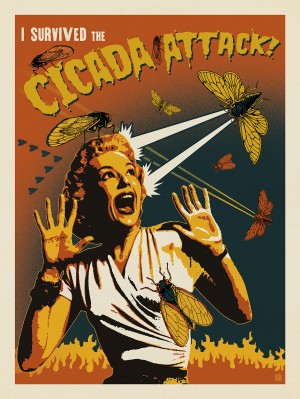
When we return to the park in the afternoon, our skin toasted and brows sweaty, we hear the the strum and buzz of the cicadas.

Continue reading
Posted in nativescience | Tagged , , , , | Leave a comment

Entering the Age of Transaction

We feel the heartbeat of Google and Apple and Facebook throb while visiting family in Northern California.

My husband and I take a short walk early every morning to find rich-roasted coffee and sweets before the family rises, and share good mornings with hikers, bikers and—no surprise—engineers.

We strike up a conversation with a retired engineer about media and identity, and ponder about what has altered the current state of communication.

When I teach introduction to communication I tell college students that communication folks define it as a transaction.

Transaction means that the sender and the receiver are engaged in an exchange, but the exchange doesn’t require symmetry or even reciprocity—just some sort of exchange.

A sender could take the form of a magazine article or a college professor.

That means a magazine article may be a passive sender, but it’s not without some influence.

Still: the reader may or may not engage fully.

The relationship isn’t—traditionally speaking—equal.

I think equality or symmetry is the essential point in our morning discussion.

For example, a professor expects to lecture to engaged students.

But the transaction is asymmetrical.

Let’s face it: the lecturer is center stage.

We all bring our baggage of expectations to a transaction, and there’s plenty of room for disappointment.

As a professor, I try to impart information, hoping students want to learn.

So you can see where I am headed: not all students have the same willingness, and the transaction can get…wobbly.

Continue reading
Posted in nativescience | Leave a comment

When First Place is More than a Win

Lachlan Morton (see credits below)

If you live in Portland, you know it’s time for the Tour de France if you have a coffee and croissant at our local boulangerie.

The owner streams the event every year.

That’s one reason I love living in this burg: the French bodegas stream cycling, the Italians stream football (soccer) and the Brits stream Wimbledon.

The boulangerie attracts all sorts: GenXers swathed in running gear, mums pushing jogging strollers, gents wearing cycling cleats, and Alte Kakers walking hand-in-hand on a pandemic stroll.

We’re all consigned to watch a few minutes of the grueling Grande Tour while biting off a bit of puff pastry.

And that’s why Josh Hunt’s piece in Sunday’s New York Times is so captivating.

Continue reading
Posted in nativescience | Tagged | Leave a comment

Lockdown for Mice

Posted in nativescience | Leave a comment

Lockdown for Mice

The Elders

When Hurricane Sandy hit the Eastern United States in 2012, the seaside town where my husband’s parents lived lost power.

They survived weeks without heat in November and December, thanks to a gas range that warmed the kitchen and let them cook soup and oatmeal.

His parents were in their advanced 80s.

We flew from the West Coast as soon as it was safe to travel, in the midst of the outage.

Parents lived on the New Jersey shore, a train-ride from New York, where the town transformed to a beachy hullabaloo in summers.

But in the off-season, the town assumed all the characteristics of Mayberry, where locals attend church on Sunday and where a neighbor might shovel your walk in winter.

More than once during the Sandy storm, local police officers and mail-carriers knocked on Parents’ door to check on them.

The locals clung to some traditions: a family-owned pharmacy that still attracted customers on Main Street and a five-and-dime that sold beach-wear, sunglasses, Sea-&-Ski lotion and postcards.

A downtown deli still makes sandwiches loaded with sliced meats, and we often bought lunch in town and picnicked on the lawn near the Library.

My in-laws’ 1960s-era split-level house was typical for the town until investors began buying up homes in the 1980s, demolishing them, and building castles big enough for a T-Rex.

Parents’ home was dwarfed by mansions erected in the sand whenever a denizen departed.

I thought about them this week as we emerged from the shadows of a pandemic, remembering them in their winter lockdown, bundled in three layers of clothing, huddled in the kitchen, and cooking oatmeal and soup.

The kitchen proved to be safe harbor for muggles escaping Sandy, and it also offered a haven for the mice.

My honey and I discovered the mice when we rose before the elders to make tea and coffee.

We were greeted by the scurry of tiny feet.

Opening one cupboard, we discovered plastic bags gnawed at the bottom, buried in rice and grain and flour and oats.

No cracker, cookie, crisp or candy-bar was left untouched.

Their Costco outings proved bountiful for the critters.

My husband found his mother’s washing-up gloves, made a mask from my bandana, and unfurled a rubbish bag.

He ordered me out of the kitchen for caution’s sake, and dove into the cupboards and tossed out packets of food without waiting for permission.

He knew his depression-era mother would balk at chucking out food “that’s still good.”

The elders survived the storm—and the mice—and we, in turn, survived the pandemic for more than 18 months of gloves and masks.

And mice.

##

In memory of mom and dad, Violet and Walter

Photo by the Author

#nativescience

#twoeyed

#indigenouswaysofknowing

#littletheories

#nativewriter

#nativepress

#kiyuska

#osage

#wahshashe

#whatstrending

#pandemic

#hurricanesandy

#cynthiacoleman

Posted in nativescience | Tagged , | Leave a comment

The New Normal


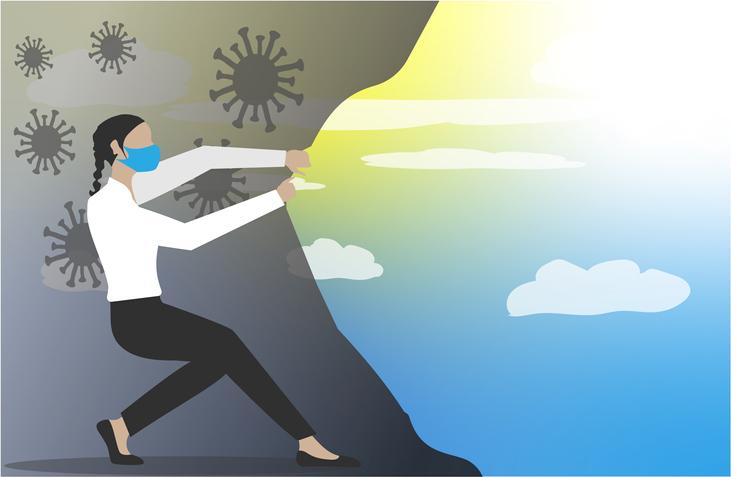
Uncredited image from the Office of Health Equity, State of Colorado

My pandemic months were normalized by my spartan wardrobe.

I rotated the same three pants over many months—gray then navy and now black—and alternated colored tops for my zoom lectures and staff meetings.

Getting dressed was mindless.

And normal.

Now—as the mercury rises in our little berg—I rescue a pair of shorts buried last year in a drawer and whisper a wee prayer of thanks: they still fit.

We can sip a soda outside and listen to the bluebirds squawk and finches trill.

The old normal.

I had the chance to meet up with a girlfriend in person and outside, on her journey to the Pacific Northwest.

We wore masks and earrings—jewelry is one thing I haven’t bothered with all year—and she told me how her golden retriever offered another heartbeat in her house, saving her from loneliness.

Her pooch passed away just before her trip, the signal of a milestone in a year of milestones.

Her new normal will continue when she returns home and welcomes a pup into her life.

Another friend reports she kept her friendships humming.

She shares meals with a pal: each of them cooks enough for two, and then passes along homemade lasagne or chicken for the other.

One of our daughters and her beau spent much of lockdown learning how to teach English to non-English-speaking children.

They overlapped taking online courses and exams, while researching countries keen on hiring English language teachers.

They decided on Thailand—a country they had scouted while traveling in Asia.

After several months of investigating life in the East, contacting schools, getting shots, reserving airline seats, paying for visas and placing their belongings in storage, they arrived in Bangkok where they spent two weeks in quarantine, giving them time to contact local schools.

And within the month, each of them had a job offer.

Another milestone and a new normal.

Reading through the headlines I see plentiful stories that beg for a return to normal.

I look at my family, friends and neighbors and see that change is the new normal.

We’re not returning.

We’re not going back.

We’re headed for the next mile and the next adventure.

That’s the new normal.

3 May 2021

Dedicated to my daughters, and to all my relatives

With acknowledgement and gratitude to the Native peoples on whose land I live, write and teach: the Multnomah, the Clackamas, and the denizens of all Indigenous nations

#nativescience

#normal

#covid

#corona

#virus

#TB

#nativewaysofknowing

#indigenouswaysofknowing

#nativewriter

#nativepress

#kiyuska

#osage

#oglala

#lakota

#pineridge

#wahshashe

#whatstrending

#thebuddhaway

Posted in nativescience | Leave a comment

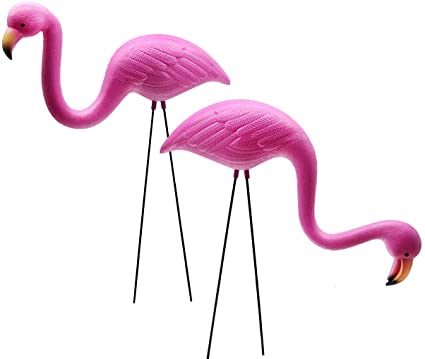
Find the flamingo and you’ll find the lampshade

I broke a lamp when I was moving items on my desk for a home zoom call.

The vintage-glass shade hit the wooden table and cracked to bits.

I asked my husband where he put the old shade—the one that came with the lamp before I found a vintage replacement—and he said it was in the garage by the flamingo.

Flamingo?

Anyone overhearing our conversation will think we’re bonkers.

The plastic pink flamingo was a housewarming-anniversary gift from our kids we found sunk in our front garden years ago.

Being cloistered during the Pandemic means my husband and I have created our own language and even copied each other’s expressions and cadence.

We call our neighbor’s chickens The Girls and our robo-vacuum Rufus.

I’m reading in the room we call the West Wing.

Yesterday he expressed amazement by saying, “Oh, man!”

That’s my expression, having never left the classroom—but I’ve never heard him say it.

When he speaks, his words are clipped and he pauses…between…phrases.

I found myself imitating him on a zoom call with 60 college students.

My cadence is quick, but I paused…between…sentences.

One of the students said she liked our theory class because it intersected with her media course, which gave me delight.

“Oh, man!” I said.

Great.

###

#nativescience

#defendpdx

#nodapl

#nativewaysofknowing

#indigenouswaysofknowing

#nativewriter

#nativepress

#kiyuska

#osage

#oglala

#lakota

#pineridge

#wahshashe

#whatstrending

#thebuddhaway

Posted in nativescience | Leave a comment