Show me your indigenous people

Sri Lankan villagers

Sri Lankan villagers

We hoped our journey to Sri Lanka would find us within indigenous communities.

We thought the best approach would be driving through the villages far outside the main cities.

Earlier this week we walked through a village to the entrance of the Knuckles mountain region, where my husband and I, accompanied by our driver and a park ranger, were greeted by several denizens. Continue reading

Posted in american indian, authenticity, Indian, Lakota, native american, native press, Native Science, Osage, science communication | Tagged | 1 Comment

Knuckle down

Our trip to the Knuckles Mountains in Sri Lanka

Our trip to the Knuckles Mountains in Sri Lanka


We traipsed through the Knuckles Mountain range in Sri Lanka this week, stretching limbs and breathing fragrant air.

The climb is vigorous: a steep uphill and downhill with potential for slippery rocks.

Continue reading

Posted in authenticity, Indian, native press, Native Science, race, science, science communication | Tagged | 1 Comment

Just one more relic

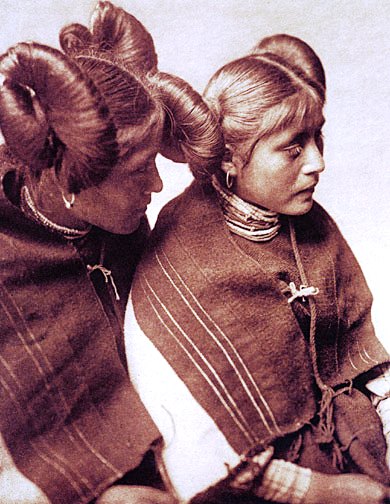
Hopi girls from the US Library of Congress

Hopi girls from the US Library of Congress

Just one more relic lost to collectors.

That’s what I thought when I read the Facebook posts by American Indian bloggers and activists about the sale of Hopi objects at an auction in Paris in December.

Just one more mask.

Just one more rattle.

Just one more drum.

The Hopi put up a fight but lost in a French court that gave the green light for the sale of sacred objects.

Reuters press ran a story on 9 December that says three dozen masks from the 19th and early 20th centuries were sold.

To the Hopi, who still live on the high desert of the Colorado Plateau in northeastern Arizona, the masks are sacred, representing messengers to the gods and the spirits of ancestors and natural forces, whether plants, animals or the sun, the report says.

Pleas by the tribe went unheeded by the French court and the Paris auction house, and the items sold for more than a half-million US dollars.

Just when you think justice is creepy—when you discover you can put a price on the sacred–the news announces the artifacts will be returned to the Hopi Nation and the San Carlos Apache tribe.

The Annenberg Foundation bought the relics for the purpose of returning them.

The Annenberg Foundation—created by the publishing empire that owns TV Guide and several broadcast outlets—gives generously to education, public health and the arts, and endowed the schools of communication at the University of Pennsylvania and the University of Southern California.

Gregory Annenberg Weingarten, a Foundation official, made the decision to rescue the artifacts.

These are not trophies to have on one’s mantel. They are truly sacred works for the Native Americans. They do not belong in auction houses or private collections, Weingarten says.

The Hopi don’t even want the relics photographed.

Good to hear someone is doing more than listening.

Photo from the US Library of Congress (copyright free)
http://www.loc.gov/pictures/item/2002719486/resource/

Posted in american indian, framing, Hopi masks, Hopi masks at Paris auction, Indian, journalism, Native Science, science, science communication, writing | Tagged , , | 4 Comments

Honoring John

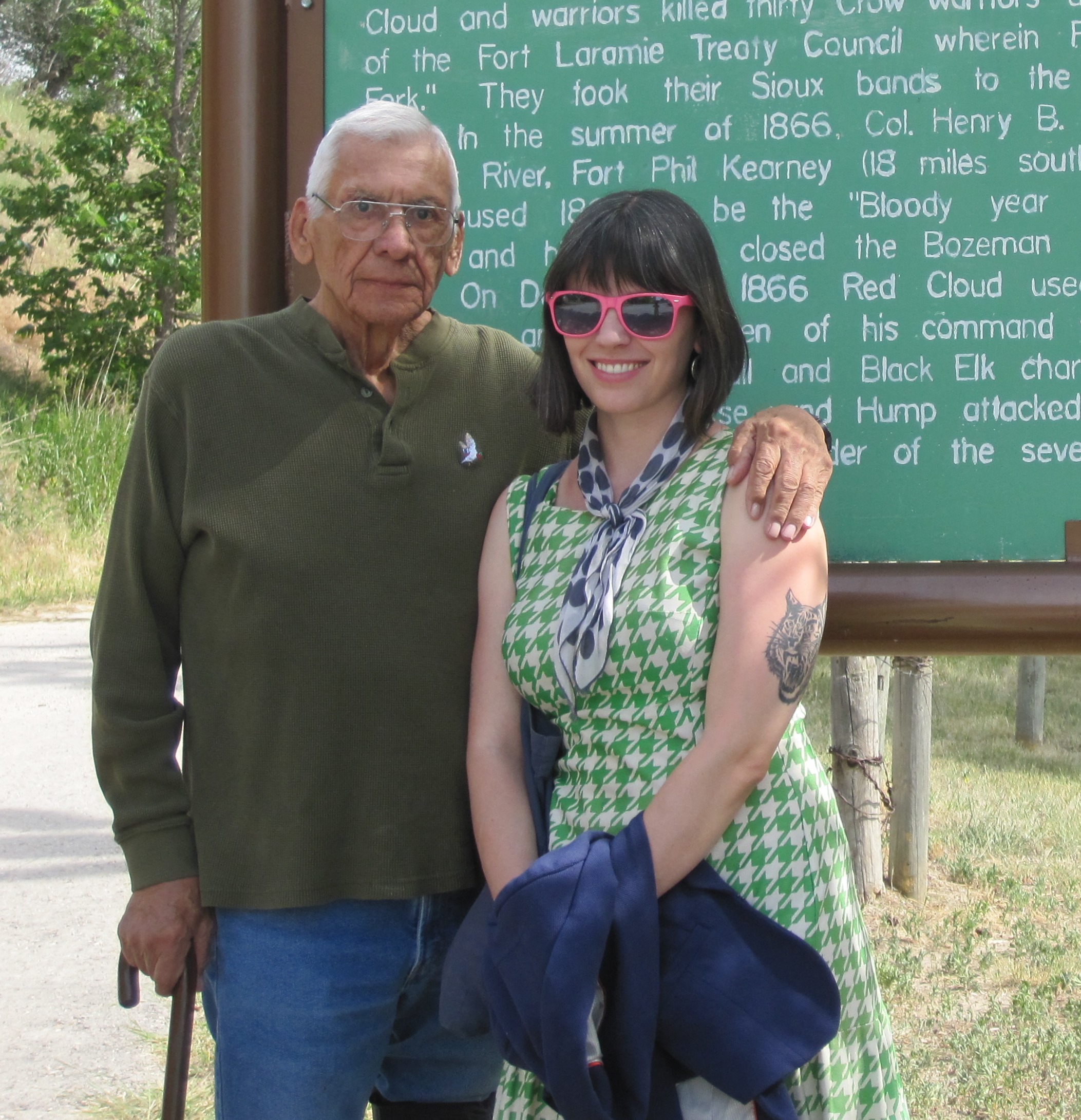
John and daughter Wee-Hey

John and daughter Wee-Hey

November honors the indigenous people of North America and many of us have been sharing memories to position Native issues at the center of discussion.

Turning the final page of the calendar marked a transition for my relative John Artichoker, who passed on November 30.

John was wonderfully generous, and invited us—sight unseen—to spend time with him in Rapid City and meet our Lakota relatives.

He took us to Sundance at Pine Ridge, introduced us to family, fed us dinner and told stories of riding a horse to the reservation school and working as an adult for the Bureau of Indian Affairs.

He was keenly curious and peppered us with millions of questions.

What’s the Osage word for salt? What’s the future of journalism? What are today’s college students like?

He was working on his memoirs and poems when he died.

In one rhyme he talked about how honored he felt that one of his sons participated in Sundance to help John heal.

That someone would endure slices to flesh and share the pain of illness touched John deeply.

He ended the poem with a grin and a flourish.

Hokahey.

Good day to die.

Fourteenth blog for National Native American Heritage Month

Posted in authenticity, framing, Indian, journalism, Lakota, Native Science, Osage, writing | Tagged , , , | Leave a comment

Think before you tweet

I'm an Indian, too

I’m an Indian, too

The headline reads: Cher blasts Thanksgiving.

The celebrity apparently tweeted the holiday signals the devastation of Indian peoples.

So she doesn’t honor the holiday.

When I was in high school I shared her feelings.

I rejected materialism, capitalism, marriage—and anything that smacked of traditions.

When I told my mother I was rejecting Thanksgiving, she just laughed.

My mother was born on the reservation in Oklahoma, and her mother, and her mother’s mother, and all her relatives celebrate Thanksgiving.

Fall marks a celebratory time for giving thanks to the creator.

And when I went to university and joined the Native American student union, we all celebrated Thanksgiving in a fellowship of many tribes and traditions.

None of the Indian students I knew rejected Thanksgiving.

Our relatives long celebrated Thanksgiving before the settlers arrived.

It’s our holiday.

Someone should tell Cher.

Thirteenth blog for National Native American Heritage Month

Posted in american indian, authenticity, Indian, native american, native press, Native Science | Tagged , , , | 5 Comments

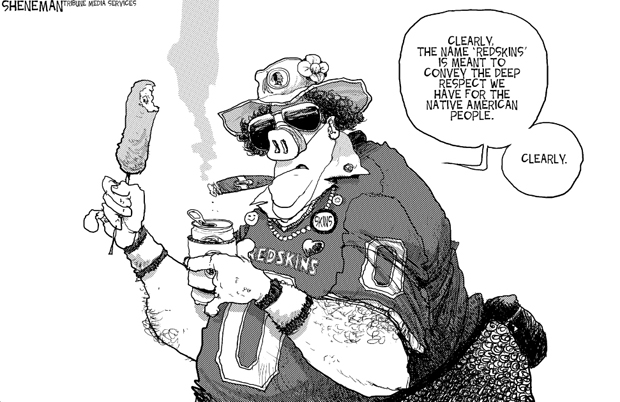
Let’s get rid of the Redskins’ name

SportsComicTalk about cognitive dissonance.

A story circulating on Facebook lauds Dan Maffei, a democratic congressional representative from New York, who asks fellow legislators to rid the Washington Redskins of its name.

American Indians and others detest the use of Redskins for the sports team, arguing that it is offensive in the worst way. Continue reading

Posted in american indian, authenticity, ethics, Indian, journalism, native american, native press, Native Science, Redskins, science, science communication | Tagged , , | Leave a comment

Race explained

imageA public exhibit on race invites you to examine your beliefs.

The exhibit declares there is no real scientific rationale for the word race and then walks visitors through a series of videos and narratives describing how race has been used to diminish and destroy others.

Much of the exhibit is devoted to people of African descent living in North America. Continue reading

Posted in american indian, authenticity, human origin, Indian, Indian relocation, journalism, Lakota, manifest destiny, native american, native press, Native Science, race, science, science communication | Tagged , , , | Leave a comment

Manufactroversy

imageHere’s a word to stitch into your vocabulary pocket.

Manufactroversy.

The word means a manufactured controversy.

And what an elegant word to share with my propaganda, persuasion and framing students. Continue reading

Posted in american indian, authenticity, ethics, framing, human origin, Indian, journalism, Kennewick Man, Lakota, NAGPRA, Native Science, neuroscience, risk, science, science communication, writing | Tagged , , , | 2 Comments

Tribal rights

20131115-121901.jpgWhat would be a good elevator speech for my talk today?

As I jet to Seattle to speak about science and public policy to a group of experts, I figure I’m not giving a lecture.

I’m telling a story.

The most compelling story I know is Kennewick Man.

Continue reading

Posted in american indian, authenticity, framing, Indian, journalism, Kennewick Man, Uncategorized, writing | Leave a comment

Justice? It depends

Burial site

Burial site

Scholars have long debated the tenets that underpin justice.

Interesting that a word we take for granted—justice—would roll over like a tumbleweed, subject to interpretations.

Definitions have emerged from many quarters—from St. Augustine, John Locke, Thomas Hobbes, Emmanuel Kant, Jeremy Bentham and Julia Kristeva—to name a few.

Today, for indigenous people, I argue the most compelling action is having a seat at the table.

If justice refers to the act of being just (morally right and fair, according to the Oxford English Dictionary), then we would expect all dimensions of rightness and fairness would be considered. And that includes indigenous perspectives.

But what occurs in daily practice is that such views are disparaged and discarded.

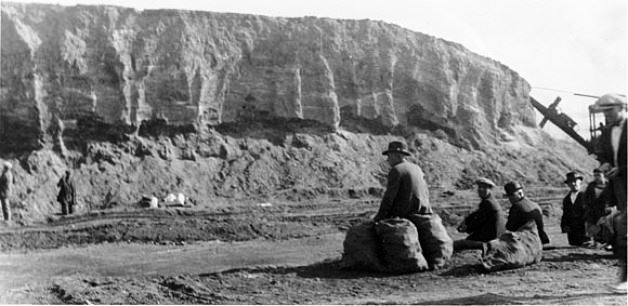
Take the example of a burial site in Northern California.

Builders discovered hundreds (some say thousands) of indigenous remains at what turned out to be a funeral site in Emeryville.

Anthropologists and archaeologists from local universities were asked to assess the remains and funerary objects, and one remarked the site is “crucial to understanding early cultures in California.”

Indian perspectives went unheeded and the burial site was covered with concrete and asphalt a decade ago.

An investor defended the construction, saying, “time marches on.”

Justice, in this case, is cloaked in moral relativism.

When looking at who gets to sit at the table, we also need to ask: who benefits?

Instead of preserving an indigenous burial site, city officials provided shoppers with a shiny new store: Banana Republic.

8 November Blog for National Native American Heritage Month

Photo of the burial site called the Shell Mound in the 1920s from http://www.sfgate.com/bayarea/article/Emeryville-Filmmaker-tells-story-of-forgotten-2690138.php#page-2
Posted in Indian, Native Science, science, science communication | Tagged , , , | 1 Comment