
Red Cloud
We tore away after Bull Bear argued with Old Smoke.
The story is that Bull Bear threw dirt in Smoke’s face, and they considered our band “cut off” or Kiyaska. Continue reading
Red Cloud
We tore away after Bull Bear argued with Old Smoke.
The story is that Bull Bear threw dirt in Smoke’s face, and they considered our band “cut off” or Kiyaska. Continue reading
 Larry McMurtry—who wrote Lonesome Dove, The Last Picture Show and Terms of Endearment—penned a biography of Crazy Horse that proved a solid summer read.
McMurtry writes about my relatives in the book Crazy Horse (Penguin-Viking, 1999).
He says Crazy Horse was a lad of five or six when Francis Parkman camped with Old Smoke’s village in 1846. Parkman wrote about his adventures in The Oregon Trail.
Parkman and his troupe, guided by my great-great-great-great grandfather, a Frenchman married to a Lakota woman, witnessed Sioux-settler relations first-hand.
Following is one of Parkman’s observations of an Oglala warrior: Continue reading

Tonto
The movie earned jibes from Indian Country and was slammed by the critics all summer.
My Facebook pals panned the film so I figure I can’t critique it without viewing it. Continue reading
 The mummy exhibit is billed as Real Science.
Calling the Mummies of the World display Real Science legitimizes the practice of stuffing dead people under glass and taking them on the road for show-and-tell.
Never occurred to me it would be fake science, but the billing allows advertisers to claim:
Real Mummies.
Real Science.
Real People.
Real Science means a team studied the human remains using modern techniques including computerized tomography (CT scans) and carbon dating without having to hack off bones for study. Continue reading
 Seems museums have dodged flak for placing dead folks on display.
And the current iteration of mummy-memorabilia is no exception. Continue reading
My colleagues and I have been groping with the idea of Native Science.
One reason is our earnest attempt to legitimize American Indian perspectives–whether it’s science, story-telling, art or language.
Artist Barbara Kruger plays with words.
Her installation at the Hirschhorn Museum in Washington DC invites you to think: it’s called Belief+Doubt.
Plastered on the museum walls and archways are bold words colored in red, white and black.
Turns of phrase beg you to pay attention:
How did I start on this path?
Dirt in my shoes.
I’m speaking about my research at a meeting attended by communication and journalism researchers and teachers.
Each of us on the panel is describing what we can learn from indigenous knowledge and how we can use this knowledge.
As a writer who likes science, I ended up studying how science is communicated, particularly issues about health, risk and the environment.
And I look at how these issues affect indigenous peoples.
Just like the characters Susan Powers describes in her book, The Grass Dancer.
In the novel, a medicine woman with a trickster streak wants to keep a white school-teacher on the rez, so she secretly sprinkles Black Hills dirt in the girl’s shoes. And the teacher just can’t bring herself to leave.
I explain to the audience that I study how Indian knowledge systems embrace a more holistic view of life, where science isn’t separated from art, music, cooking, eating and hunting–at least, traditionally.
But that doesn’t mean native peoples are anti-science. Science is folded into everything.
Including the dirt in my shoes.
[Photo of the Black Hills from city-data.com]

Science as web
The talk was sponsored by a prestigious science academy so I expected more than a blunted view of lay audiences.
Maybe that’s because I have re-examined my own thinking about science.
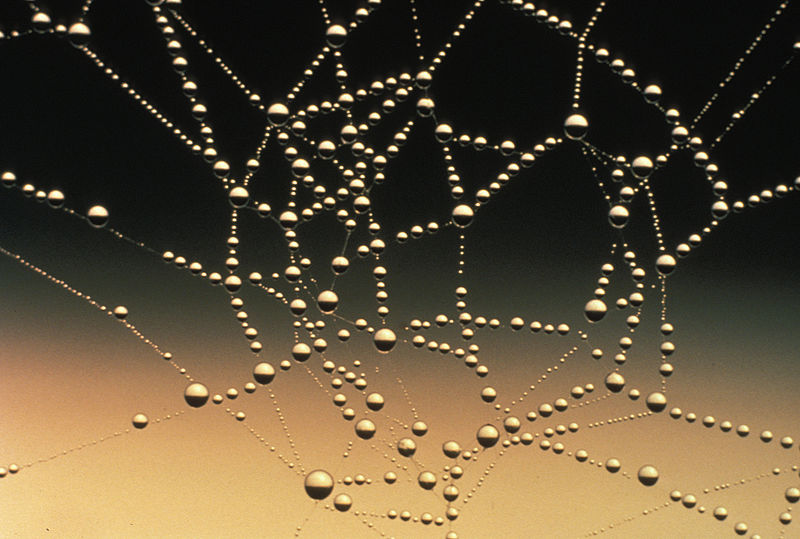
When I study journalistic stories on scientific (and environmental, health and risk) conflicts in Indian Country, I find reporters often frame Indians as anti-science. Continue reading

Home-grown
Nicotiana sylvestris
I cannot tell you because I don’t understand myself.
Early spring a photo of a white trumpet flower caught my eye while rifling through seed packets at the garden shop. Continue reading


 Cynthia (Ištá Tȟó Tȟó) Coleman Emery's Blog