Think critically

Picture1
When a politician recently ranted that universities shouldn’t be concerned with truth but rather serving the workforce, critics sharpened their pencils.

The governor of Wisconsin, Scott Walker, wants to gut support by 13% and refashion higher education’s mission in his state.

He wants to strike the motto that universities should seek the truth.

Pretty bold for a guy without a college degree. Continue reading

Posted in american indian, communication, education, Native Science, science, scott walker | Tagged , , , , , | 2 Comments

I didn’t grow up in your country

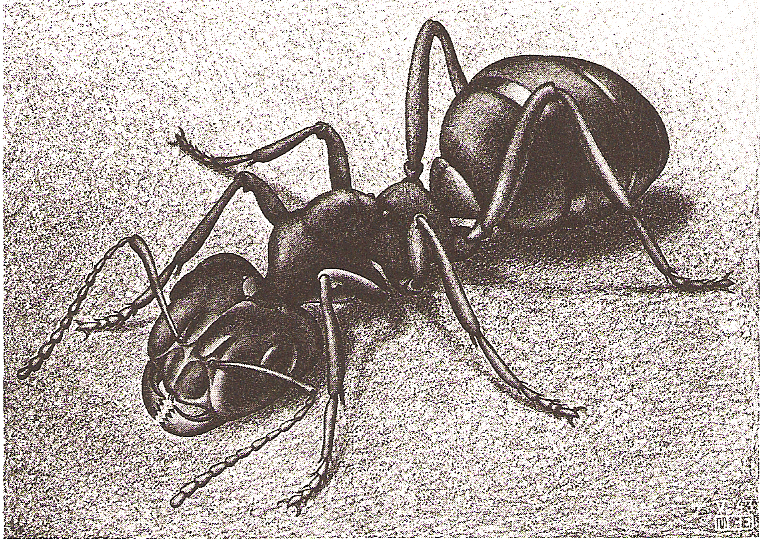
Rendering by Dutch artist MC Escher

Rendering by Dutch artist MC Escher

Sometimes my college students need to set me straight about schooling in North America.

I didn’t grow up in your country, I confess.

Students scratch their heads: how can you be part American Indian and be from somewhere else? Continue reading

Posted in american indian, communication, Dutch, family values, Holland, native american, native press, Native Science, writing | Tagged , , , , | 4 Comments

Journalistic Schadenfreude

Brian Williams pilloried

Brian Williams pilloried

As news broke in February when NBC anchor Brian Williams got caught in a reporting fib, journalists and critics rushed to pass judgment.

The New York Times, for example, packed the newspaper with stories and editorials that carved a wide swath.

One pundit said Williams’ ego finally got the better of him: that he had been courting fame and was caught in his own braggadocio. Continue reading

Posted in Brian Williams, framing, jon stewart, journalism, writing | Tagged , , , , , , , , , , | Leave a comment

Super Bowl relarity

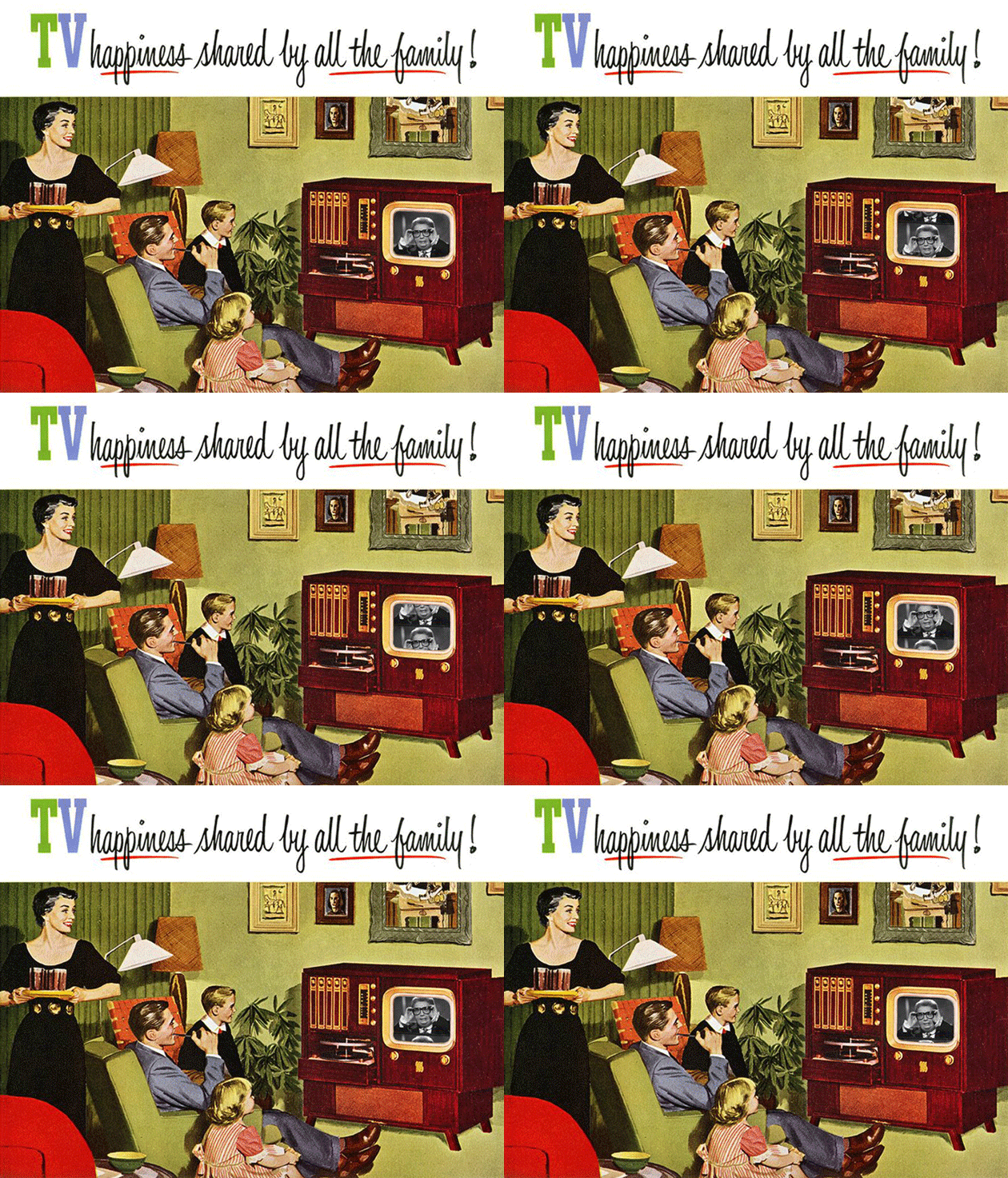
630_JGTV-II
You have to keep your sense of humor when it comes to mass media.

As scholars we take media seriously but the Möbius folds of our reality—what Jean Baudrillard correctly called hyperreality—illustrate how messages, agendas, persuasion and propaganda get tucked within an event we describe as real.

But the mixture of hyped reality with hilarity creates a relarity.

Take the Super Bowl as an example. Continue reading

Posted in ethics, framing, journalism, native american, native press, Native Science, rhetoric | Tagged , , , , | Leave a comment

When individual choice causes harm

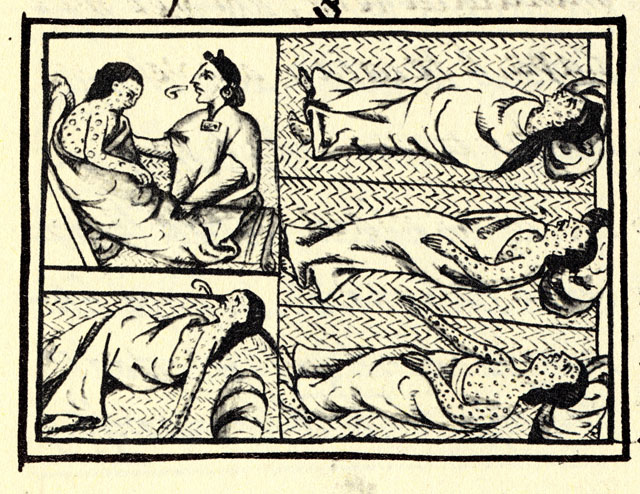
How ironic that American Indians were helpless against diseases brought by foreigners--diseases that today can be controlled with vaccines that some folks ignore wholesale

How ironic that American Indians were helpless against diseases brought by foreigners–diseases that today can be controlled with vaccines that some parents ignore wholesale

Vaccine lunacy is the way Frank Bruni described a recent outbreak of measles in California: why? Parents decided to withhold vaccinations from their children.

Children are taken ill with a disease that was once wiped from our memories–a disease that can blind you, make you sterile or kill you if you haven’t been vaccinated.

Bruni laid into what he called the madness, listing four key reasons why he thinks parents act foolishly in the face of concrete evidence that risks to vaccines are so low: Continue reading

Posted in american indian, authenticity, framing, Indian, journalism, Native Science, science, science communication, writing | Tagged , , , , , , , , , | 3 Comments

Why beliefs matter with climate change

factorysmoke
I wish I knew more about climate change.

Problem is I’m occupied with discourse—the stories we grab from headlines, television and Twitter.

How do we (I mean discourse) talk about climate change?

What occurs in my circles is the sheer bewilderment—on the part of scientists and folks like me interested in science communication—that our beliefs trump facts.

Climate change gives us a perfect exemplar when we discount evidence because it doesn’t comport with what we hold dearly.

Take the case of the link between abortion, miscarriage and breast cancer.

A 2004 report based on 39,000 women with breast cancer and 48,000 women without breast cancer reported women who had an abortion were more likely to have breast cancer than other women.

Abortion foes praised the study while freedom-of-choice advocates decried it.

Point is that folks with a vested political or religious belief accepted or denied the evidence.

Turns out today, with 10 more years’ worth of data on women and breast cancer, the interpretation of evidence has shifted: scientists agree there is no significant link between abortion, miscarriage and breast cancer.

Regarding climate change, scientists argue that we—ourselves—are to blame for changes in the environment that have wrought acid rain and drought.

Why, then, should we object to measures that would help restore nature’s balance?

One reason is that some people prioritize benefits to humans over benefits to nature.

Take the example of John Boehner, Speaker of the US House of Representatives and a Republican from Ohio, who dismissed science when looking at climate change.

“I’m not qualified to debate the science,” he told reporters.

His argument hinged on a different element altogether—not the scientific evidence of climate change—but rather his beliefs that the Obama administration’s actions to address the environment would harm jobs.

Here is his key point: “Every proposal that has come out of this administration to deal with climate change involves hurting our economy and killing American jobs,” said Boehner.

It’s a matter of priorities and values.

Clearly abortion foes value less the freedom-to-choose. And Boehner? He values a robust economy over policies to confront climate change.

By claiming he “can’t debate the science,” Boehner removes evidence-based judgment, opting instead for a value-system that trumps a competing values-system.

Turns out it’s not about science after all.

#nativescience

Picture from the Environmental Protection Agency http://www.epa.gov/climatechange/basics/
Posted in framing, Indian, Native Science, science, science communication, Uncategorized | Tagged , , , , , , , , | Leave a comment

Uncle Silverback

Artwork by Calvin McCluskie

Artwork by Calvin McCluskie

Uncles are important in my family.

My mother had two brothers and my father had four, and uncles would hang out at our house, bringing doughnuts and helping with weekend chores.

In the Osage language the word for father is the same for uncle (in-dat-say). Meaning in language becomes an ant-hill: a bastion full of secret passages.

Uncles—and aunties—are important: with grave nuance they teach us how to respect our traditions.

As kids and budding adults we looked to our relatives to learn about our ways. Continue reading

Posted in american indian, communication, family values, Indian, native american | Tagged , , , , , , , , | Leave a comment

Missing truths

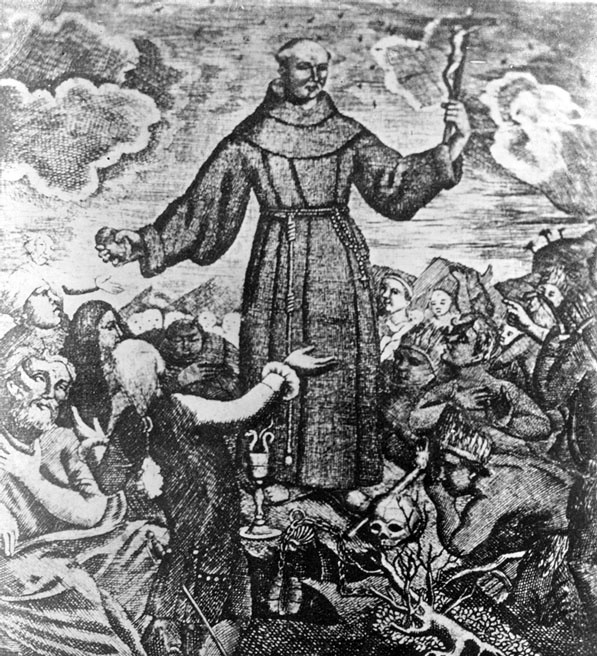
Lithograph of Junipera Serra and subjects

Lithograph of Junipera Serra and subjects


As a kid growing up in Southern California (we moved overseas when I was 10) we visited missions that dot the west, built by Spanish priests centuries ago.

I remember the missions reverently: made of adobe and tile that cooled the warm air, surrounded by olive and eucalyptus and madrone trees.

When I read this week that one of the mission’s founders is being considered for sainthood, I recalled the cool missions we visited, smelling the fragrance of the shrubs.

Turns out the stories we heard as kids missed a chunk of truth. Continue reading

Posted in american indian, authenticity, framing, Indian, journalism, Junipera Serra, science, writing | Tagged , , , , , , , , , | 1 Comment

Name your demon

paper-fold-ppt-1

I heard a comic declare, “no good story ever began with the phrase I was eating a salad.”

My story begins in the bathroom, not at the dinner table.

I was lounging in a hot bath and catching up on my reading, when I uncovered a nugget in a medical journal: the Little White Paper.

The Little White Paper is the story of doctor-patient communication.

The patient—always described as a lady—will open her purse, extract a tiny piece of paper, unfold it, and produce a long list of questions for the doctor.

She then ticks off each item while the doctor in the story listens and addresses each question soberly.

The Little White Paper is referred to as La maladie du petite papier (the little paper disease), which arises when “an exhaustive list of purported ailments is carried around by a neurotic patient,” writes Suzanne Koven, MD, in the December 11 (2014) issue of the New England Journal of Medicine.

Koven says that, although doctors find La maladie du petite papier annoying, “naming our demons and saying their names aloud helps make them less frightening.”

And simply paying attention to the questions and complaints offers patients comfort.

Sometimes, Koven writes, “a lady just needs someone to listen.”

Photo from http://galleryhip.com/folded-paper-structure.html

#nativescience

Posted in communication, health, journalism, science communication | Tagged , , , , , , , , | Leave a comment

The problem with science communication

beliefs

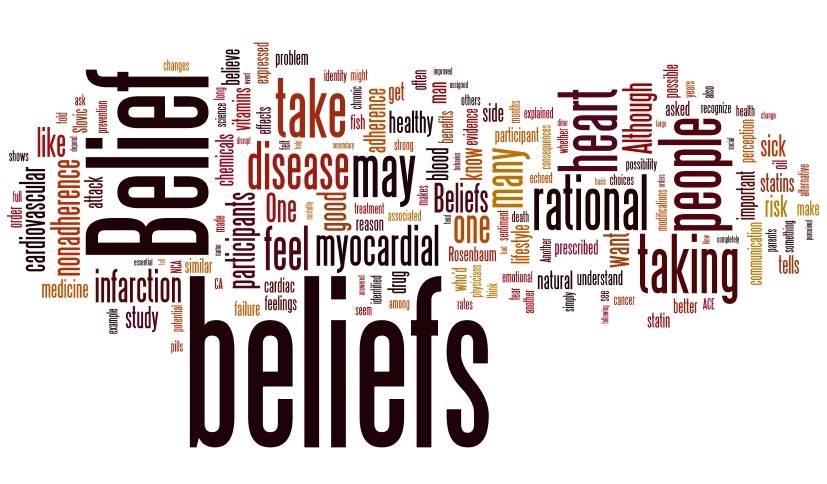
The problem with science communication is that its essence is tethered to the premise that people are rational and want to make rational choices.

In fact, our communication is based on the premise that if you provide people with the facts, they will respond accordingly and adopt good behaviors.

Not so. Continue reading

Posted in framing, journalism, Native Science, science, science communication, writing | Tagged , , , , , , , , , | Leave a comment